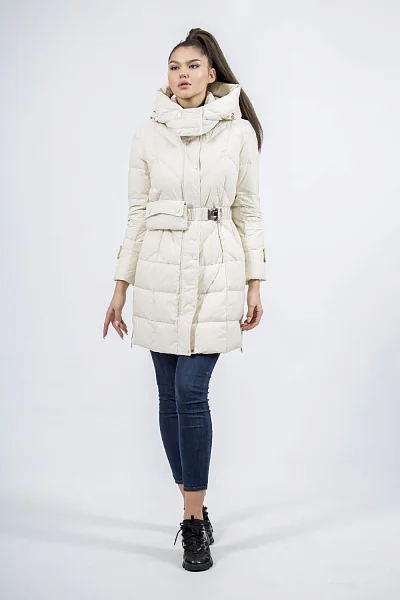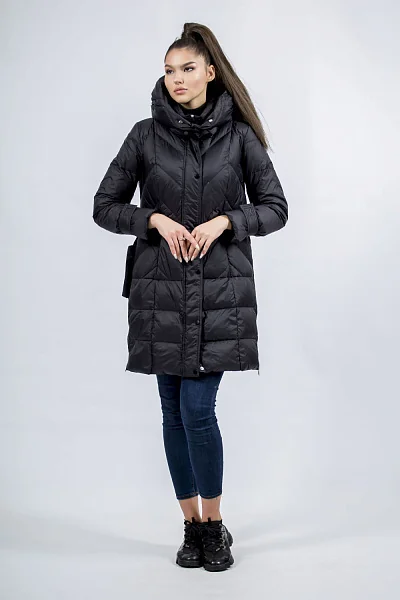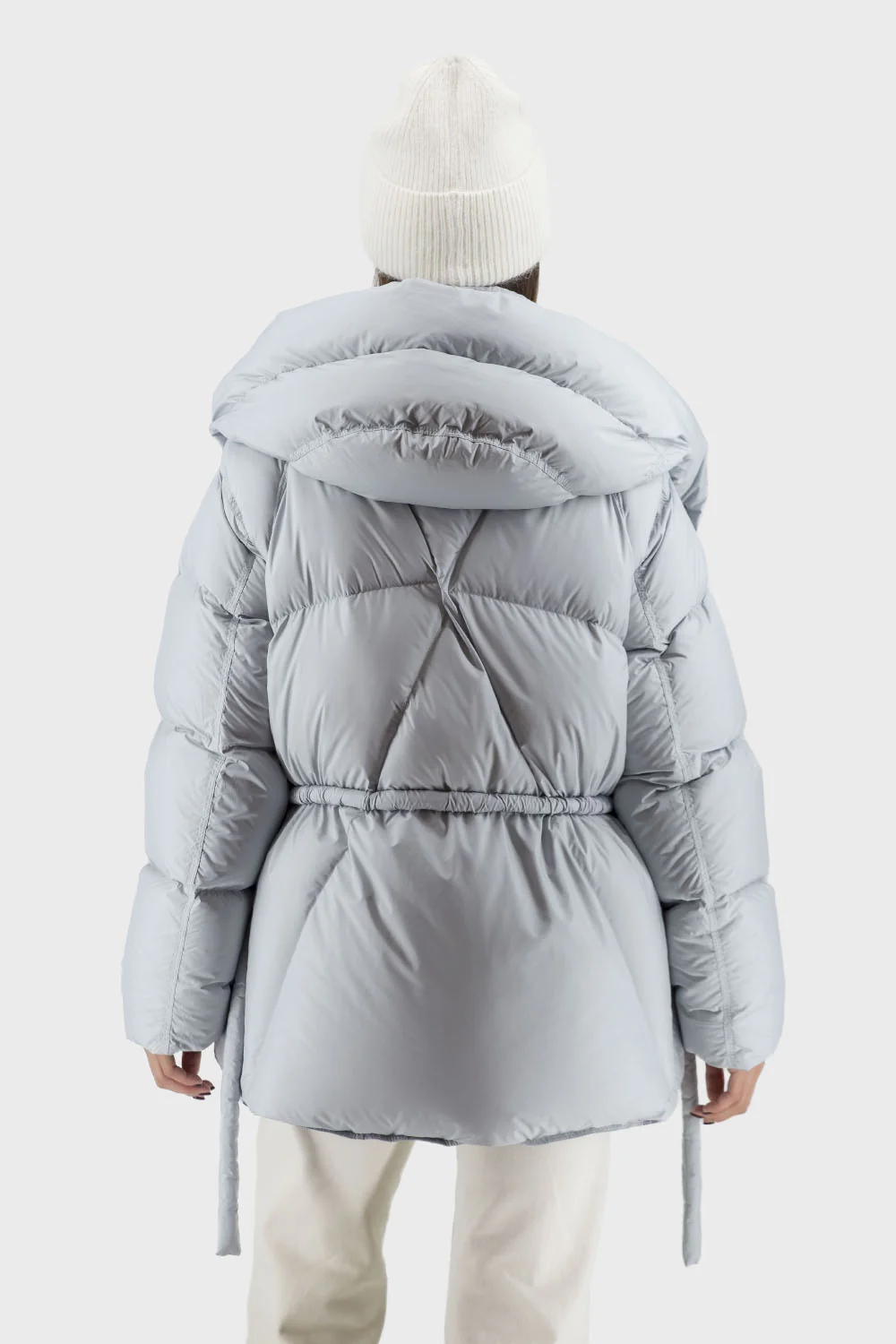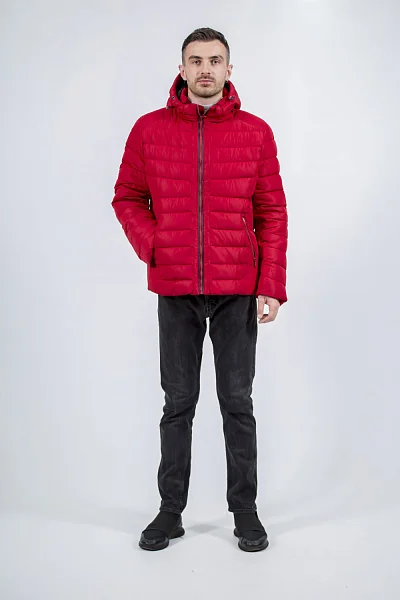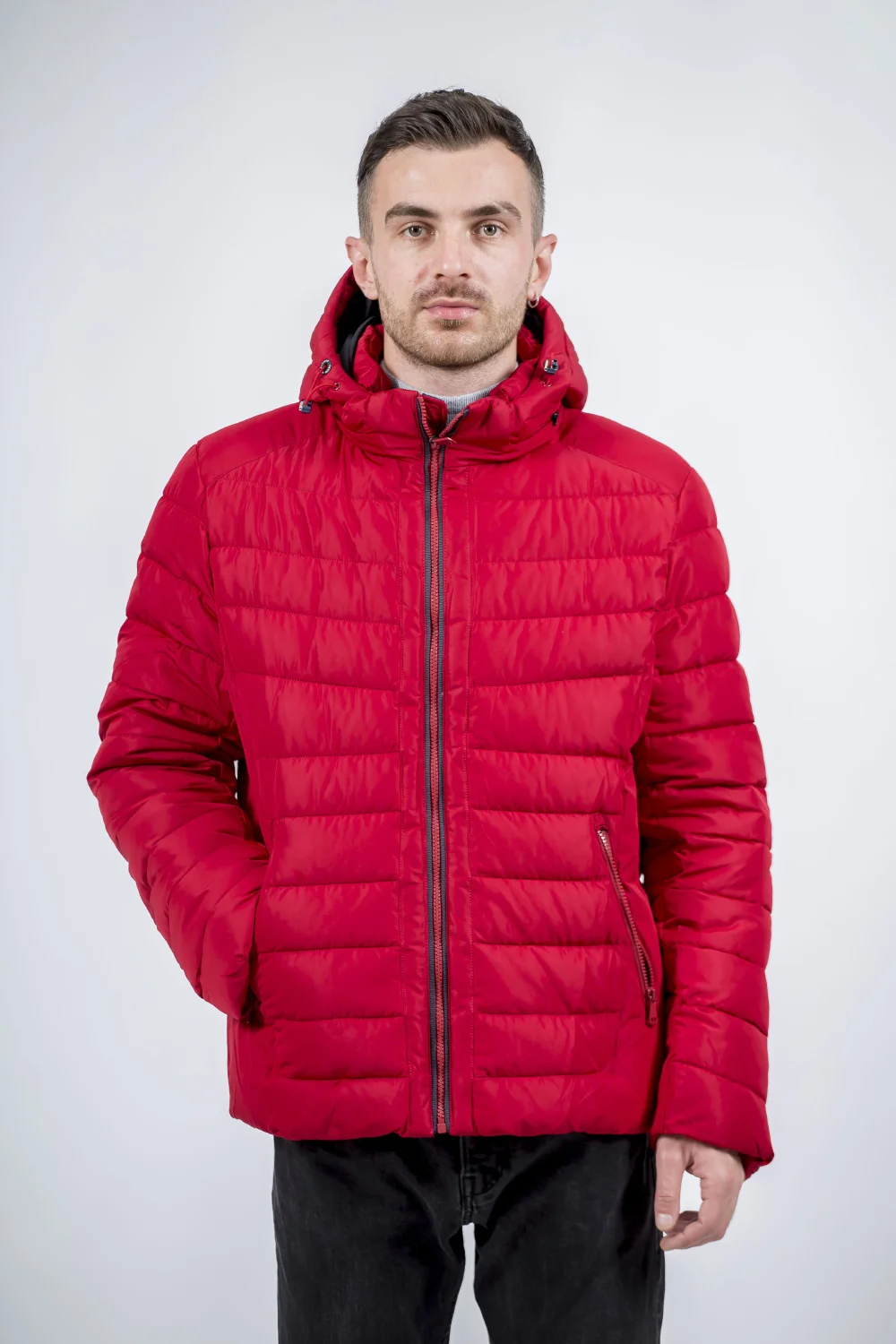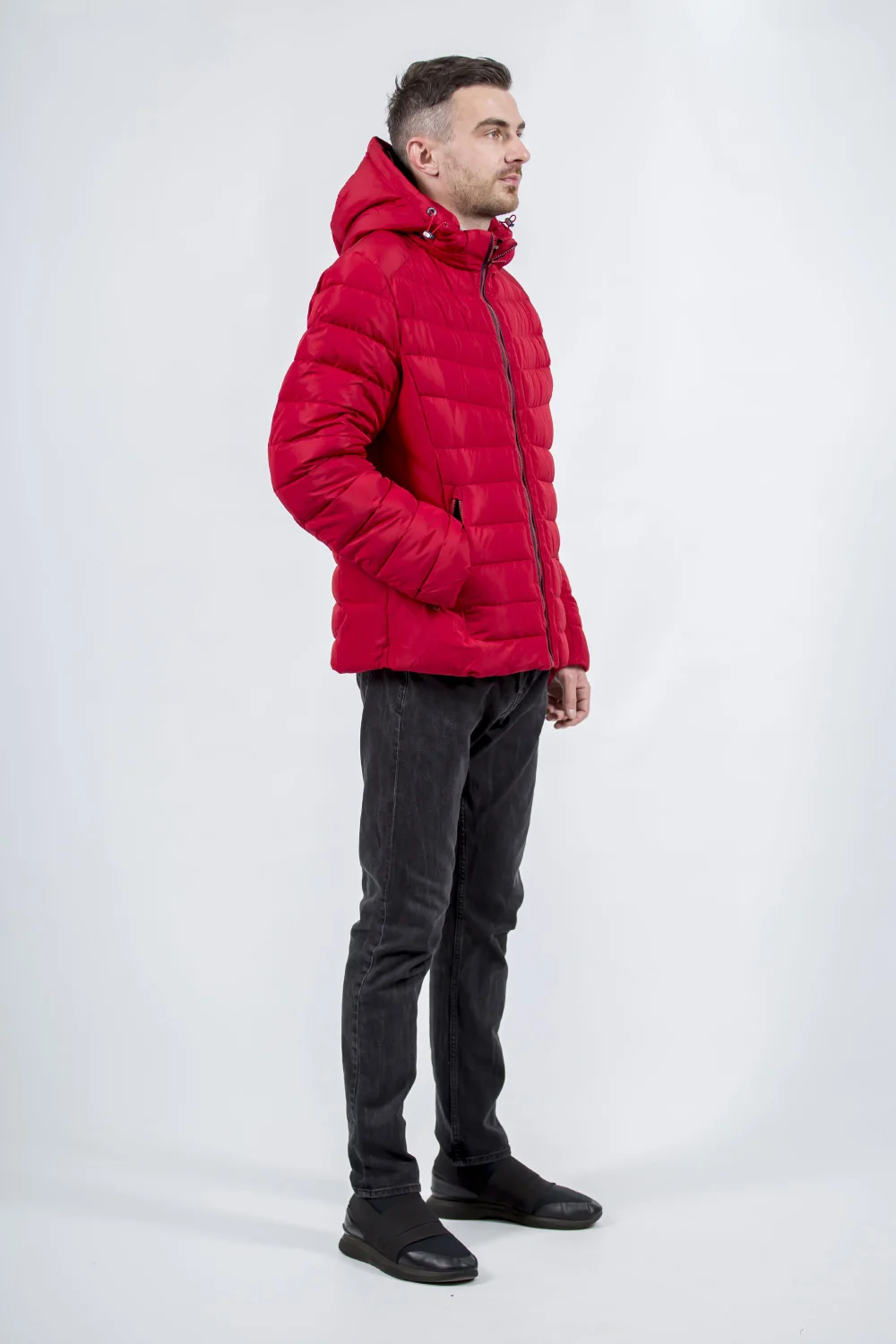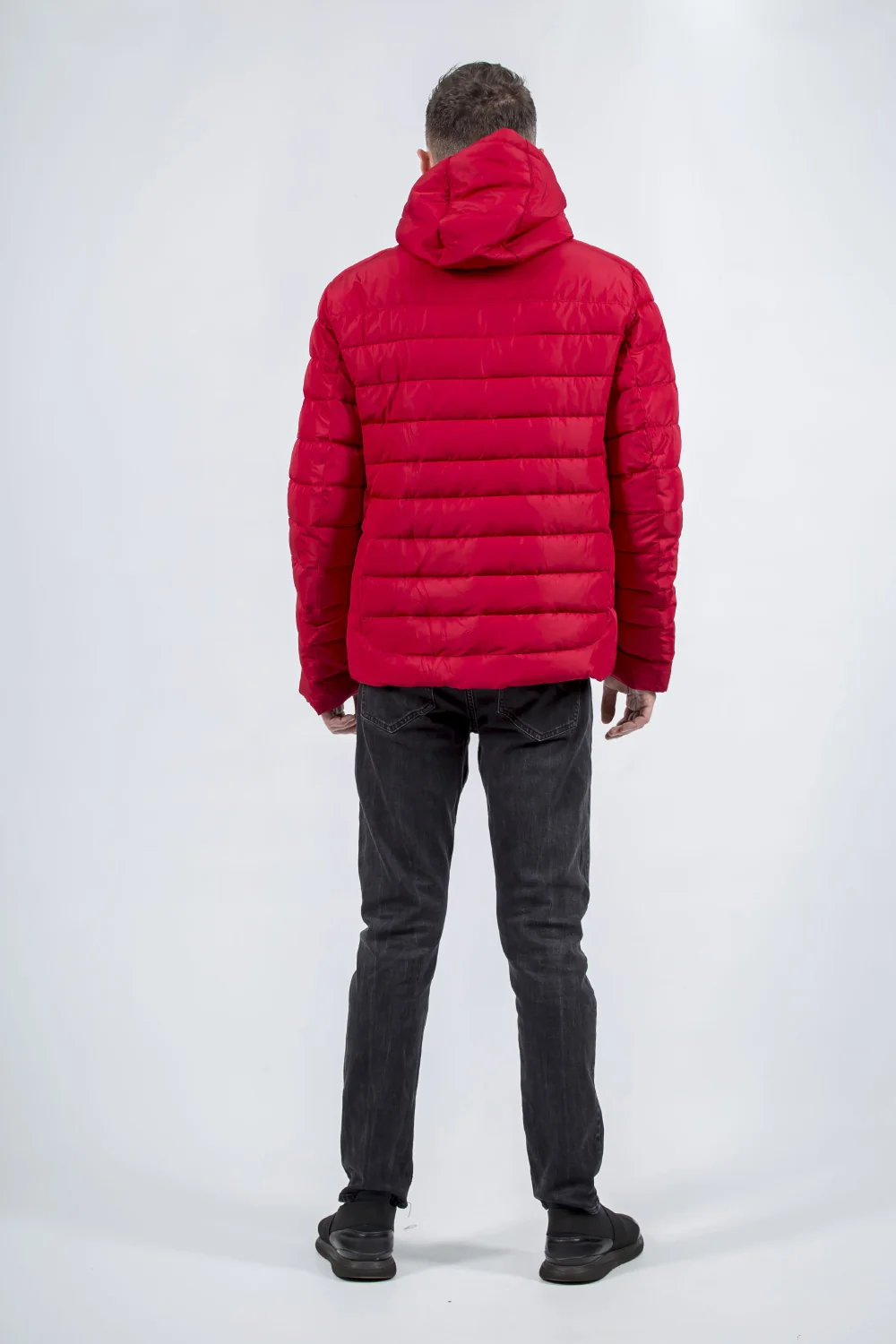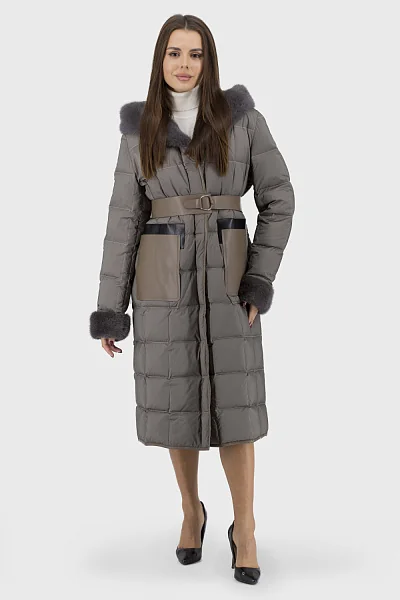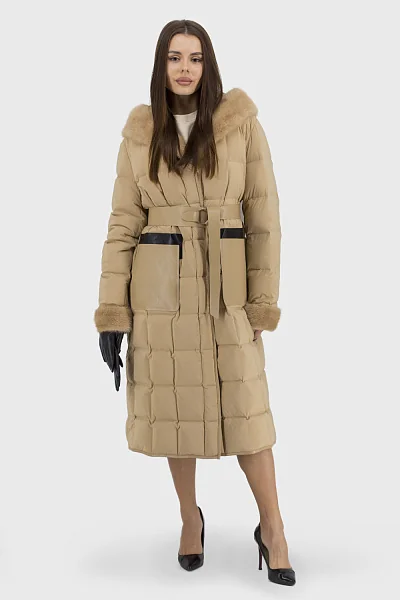
What down and feather filling means
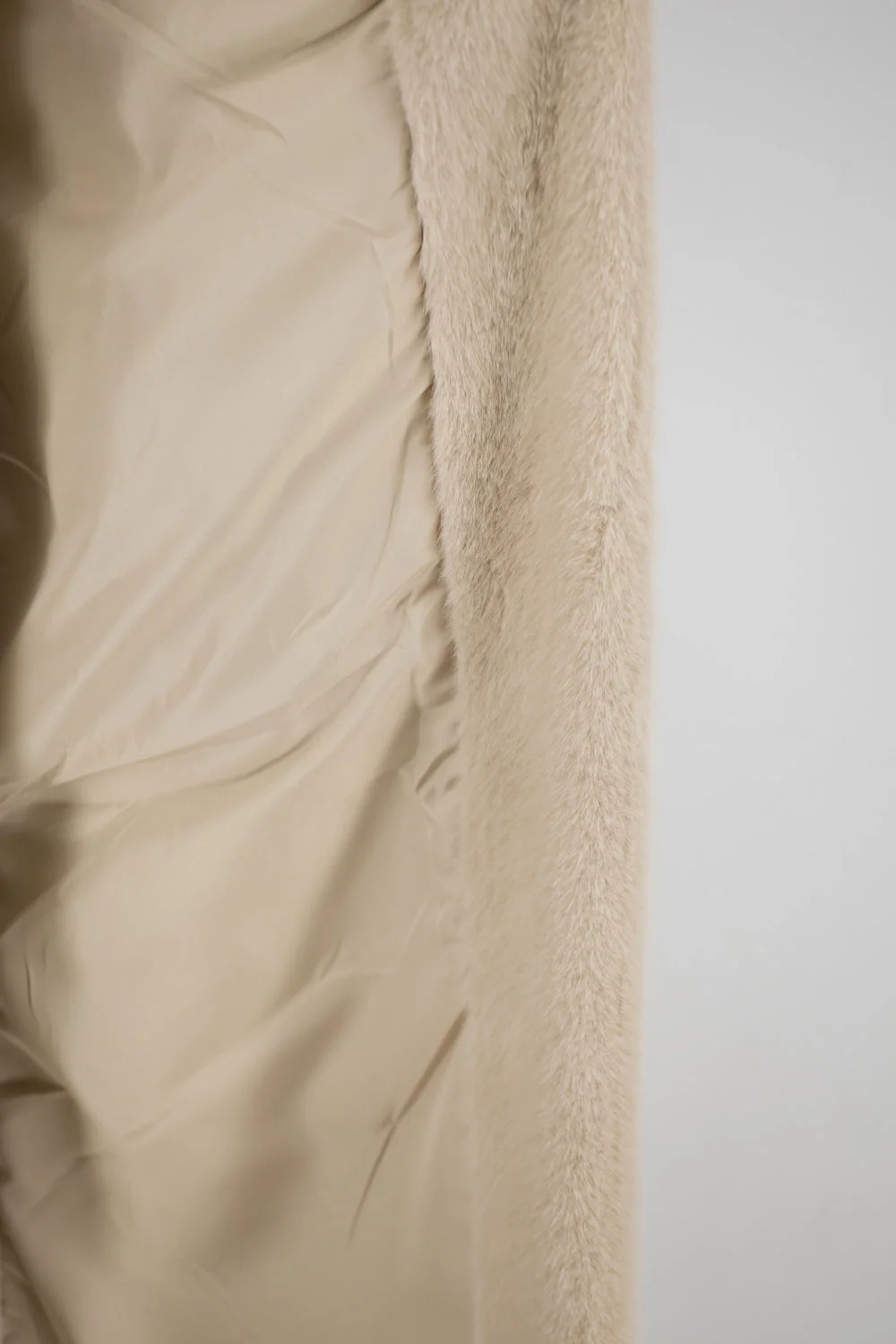
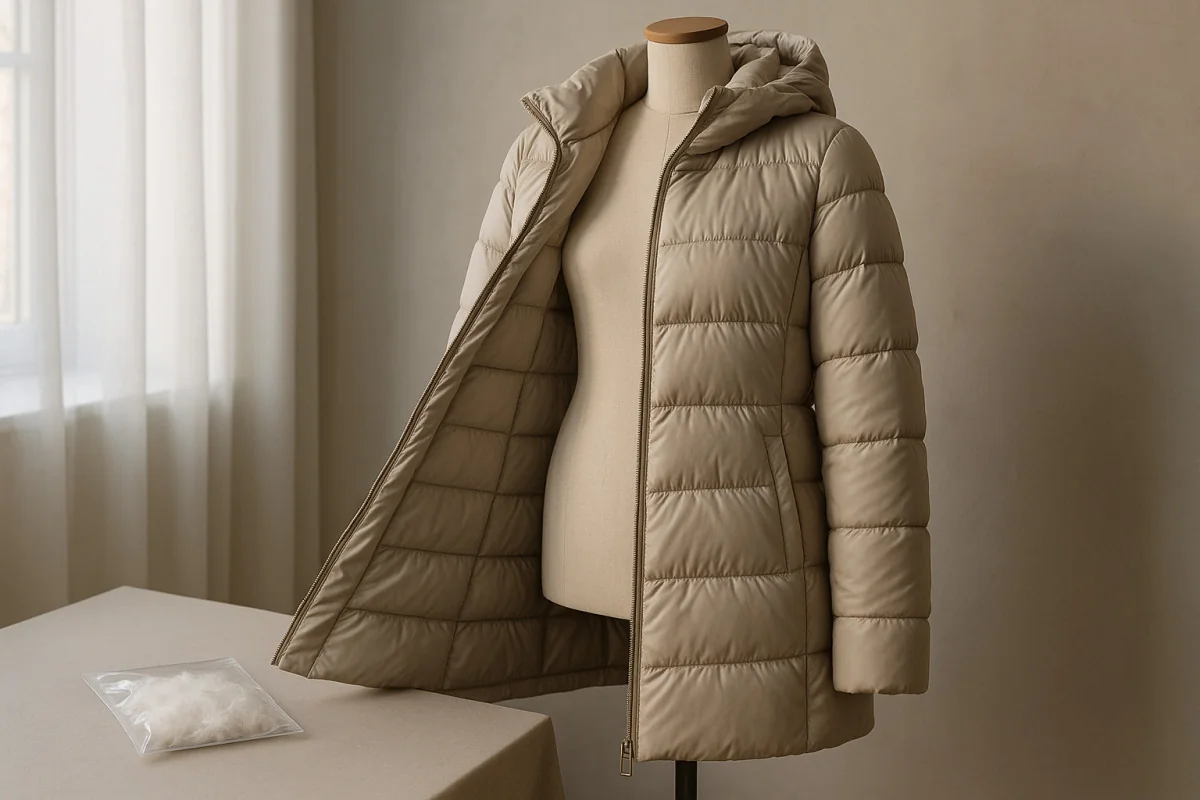
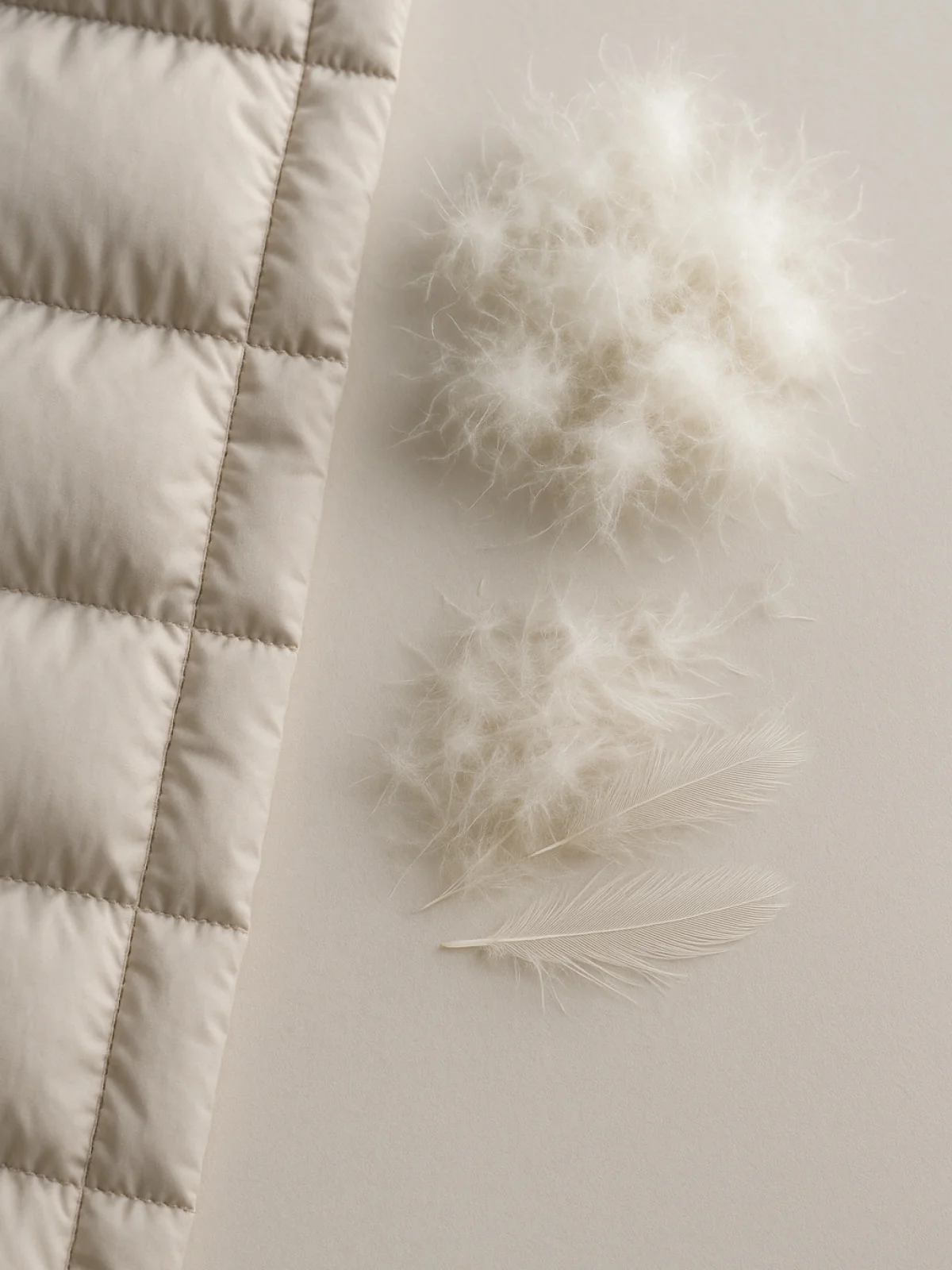
Down and feather is a natural insulation made from soft down clusters and a smaller amount of feather. Down provides warmth and lightness, while feather adds structure.
Goose and duck down are both used in outerwear. Goose down usually has larger clusters and can provide excellent warmth at a lower weight.
Why down retains heat
Down clusters trap a large volume of air. This layer of air slows heat loss and protects the body from cold conditions.
A warm down coat does not need to feel excessively heavy. The ability of the filling to regain loft is more important than weight alone.
The difference between down and feather
Down has no rigid central shaft. It is soft, light and highly resilient.
Feather has a central shaft and provides structure, but it is heavier and less effective at insulation.
Understanding fill ratios
A 90/10 label means 90% down and 10% feather. This ratio provides high warmth with relatively low weight.
Ratios such as 80/20 or 70/30 are also suitable for everyday urban winter outerwear.
The total amount of filling, coat length, chamber construction and outer fabric are equally important.
What fill power means
Fill power measures how much volume a specific amount of down achieves after expanding. A higher figure generally means more trapped air and a better warmth-to-weight ratio.
It is particularly important in lightweight coats designed to provide warmth without excessive bulk.
Advantages of goose down
Goose down is valued for low weight, warmth, softness and the ability to recover its shape after compression.
Down outerwear is comfortable for walking and daily city use because it does not feel unnecessarily heavy.
Possible disadvantages
Natural down is sensitive to moisture. When wet, clusters can stick together and temporarily lose insulation.
The garment also requires careful cleaning and drying. Weak fabric or seams may allow small fibres to escape.
Down and allergies
High-quality down is thoroughly cleaned, but people with confirmed sensitivity may prefer synthetic insulation.
It is also important to distinguish sensitivity to down from reactions caused by dust or poorly processed filling.
How to assess quality
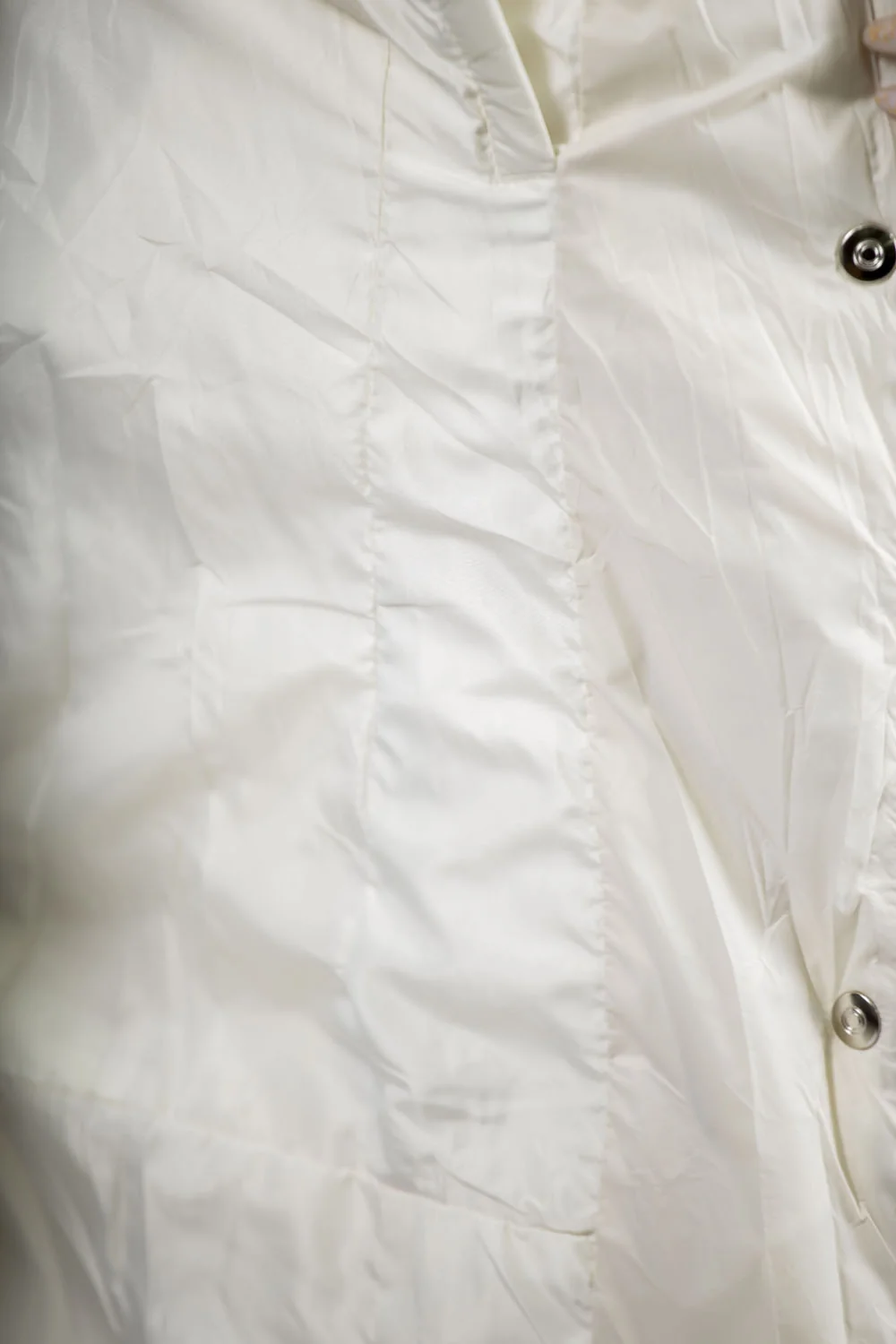
Compress a section of the coat and release it. Good filling should gradually regain volume without hard lumps.
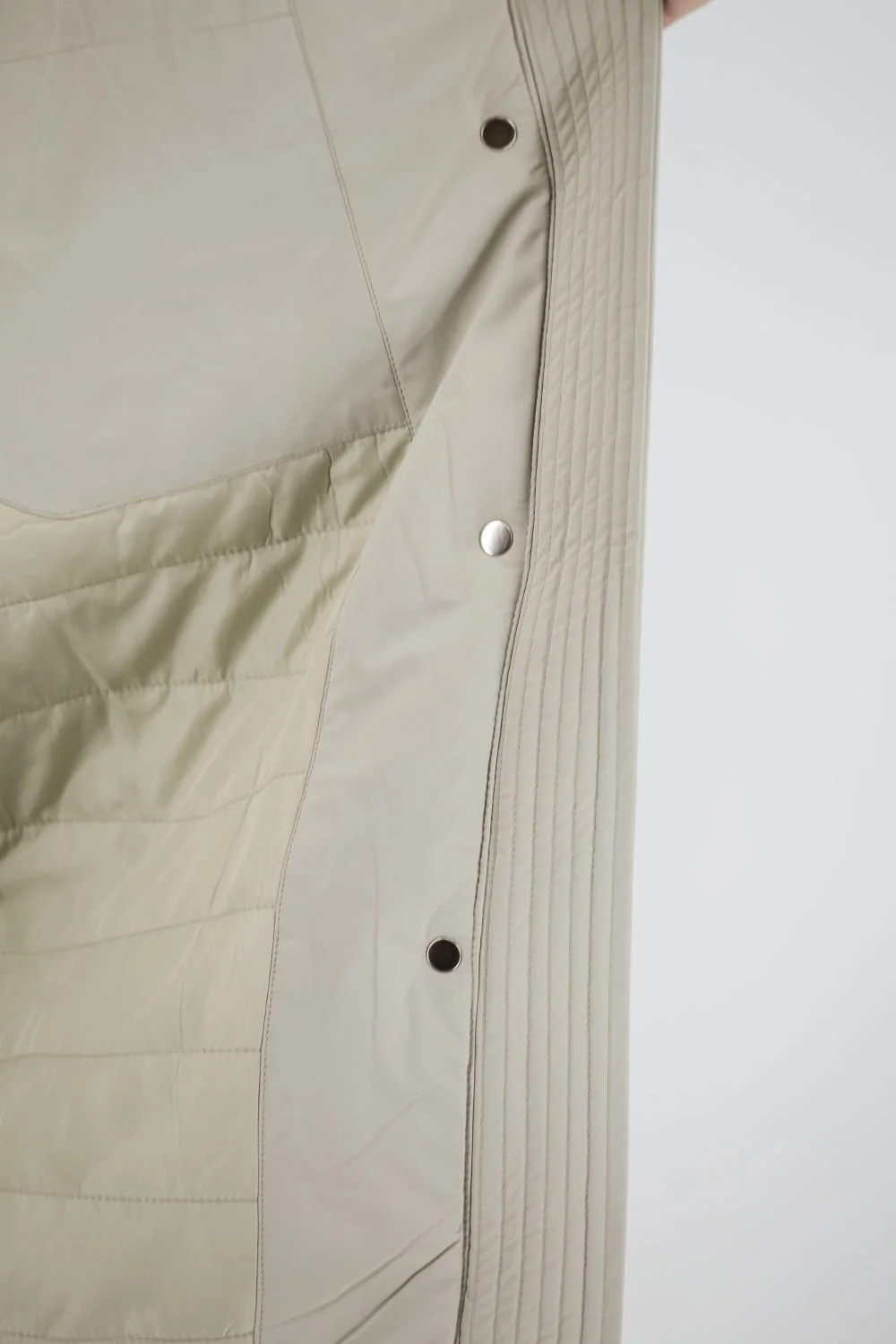
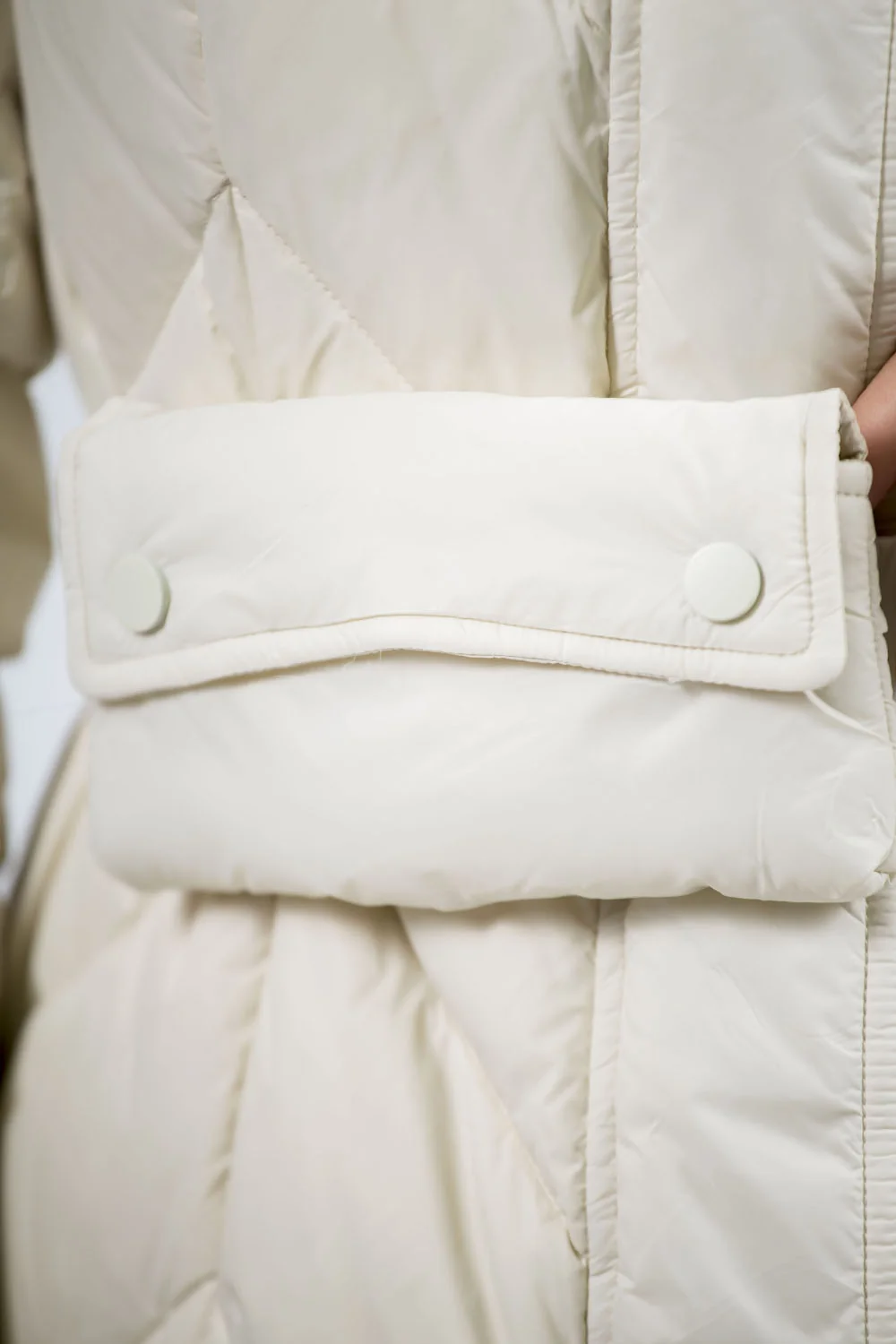
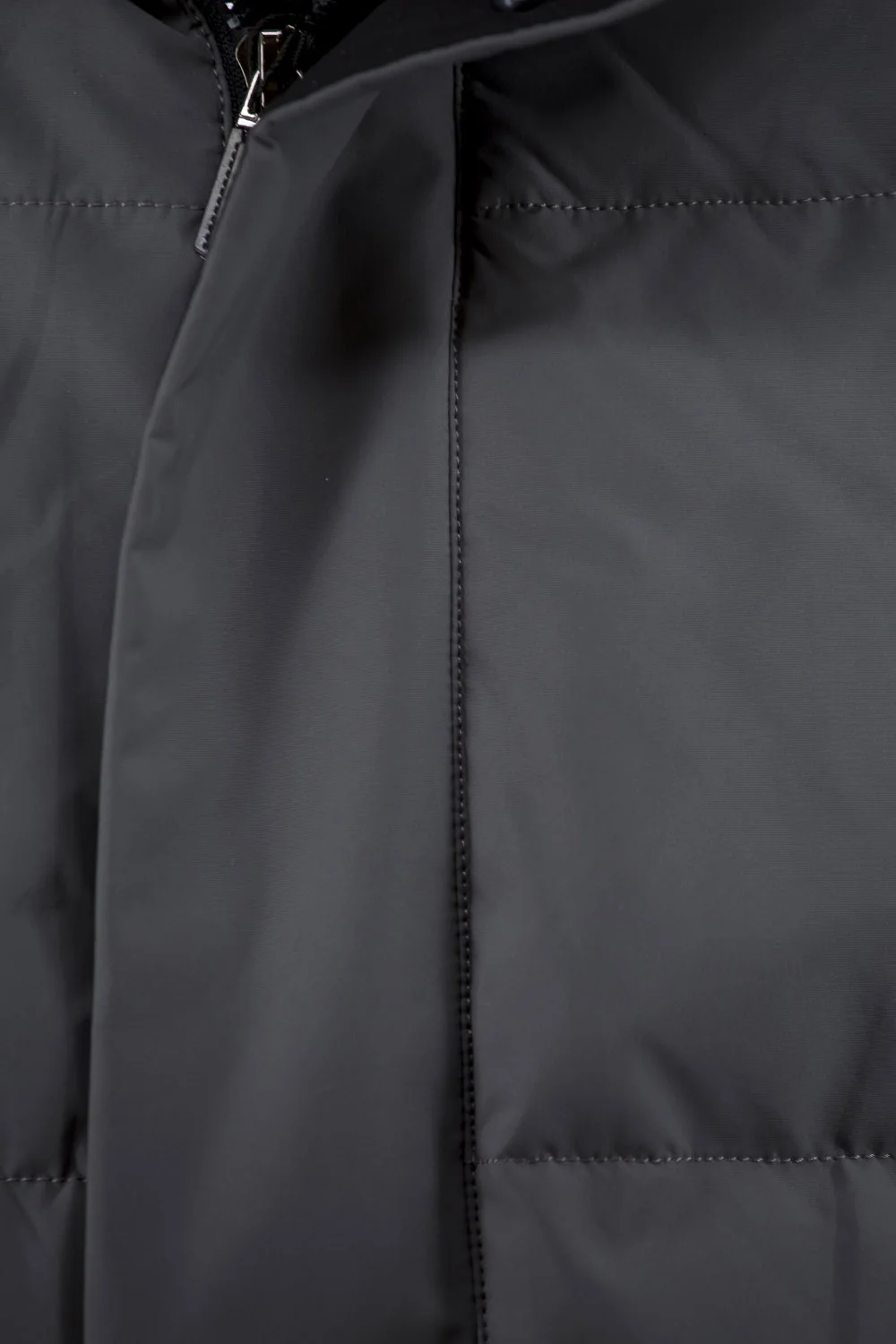
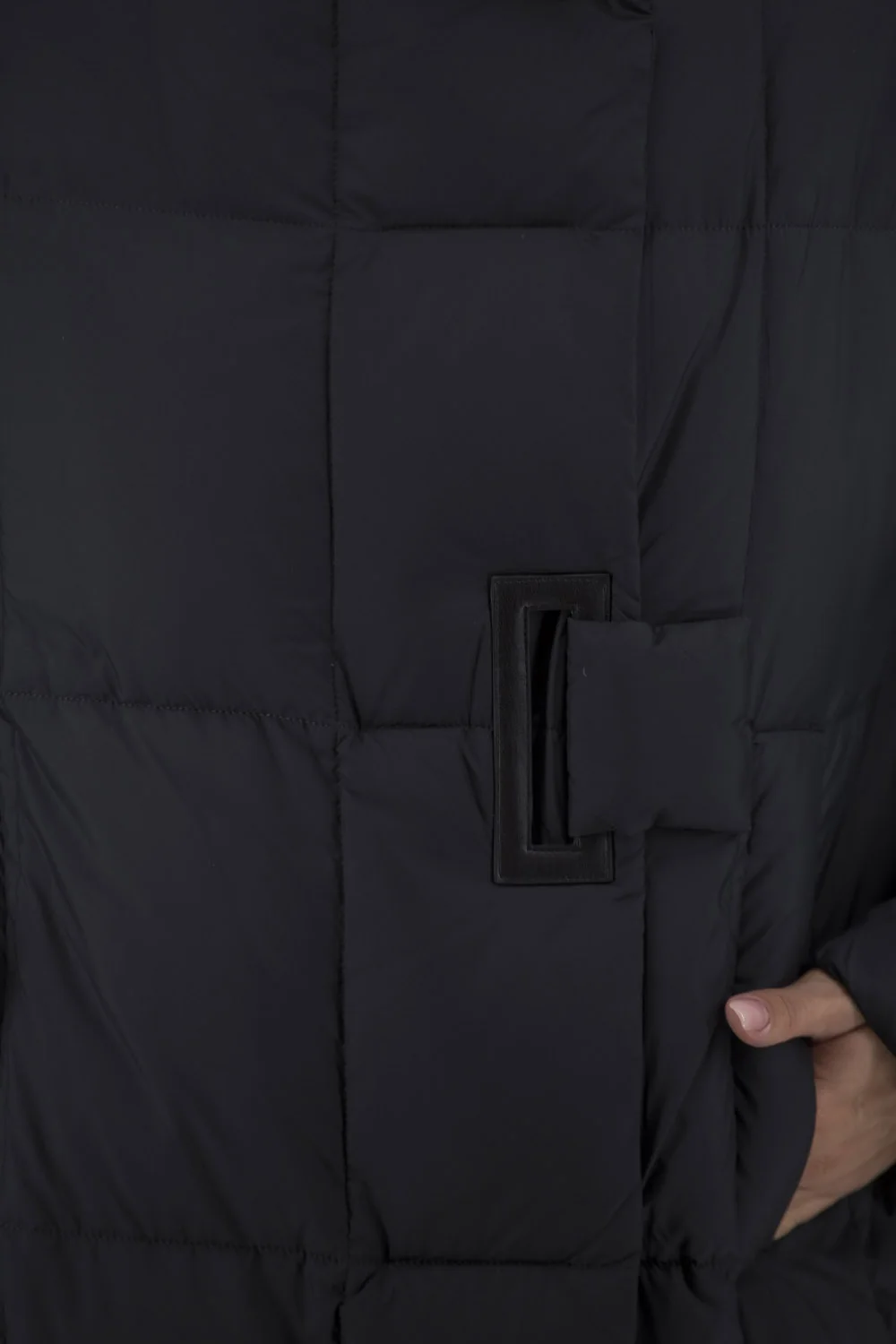
Check the seams, pockets and quilted sections to make sure the filling is distributed evenly.
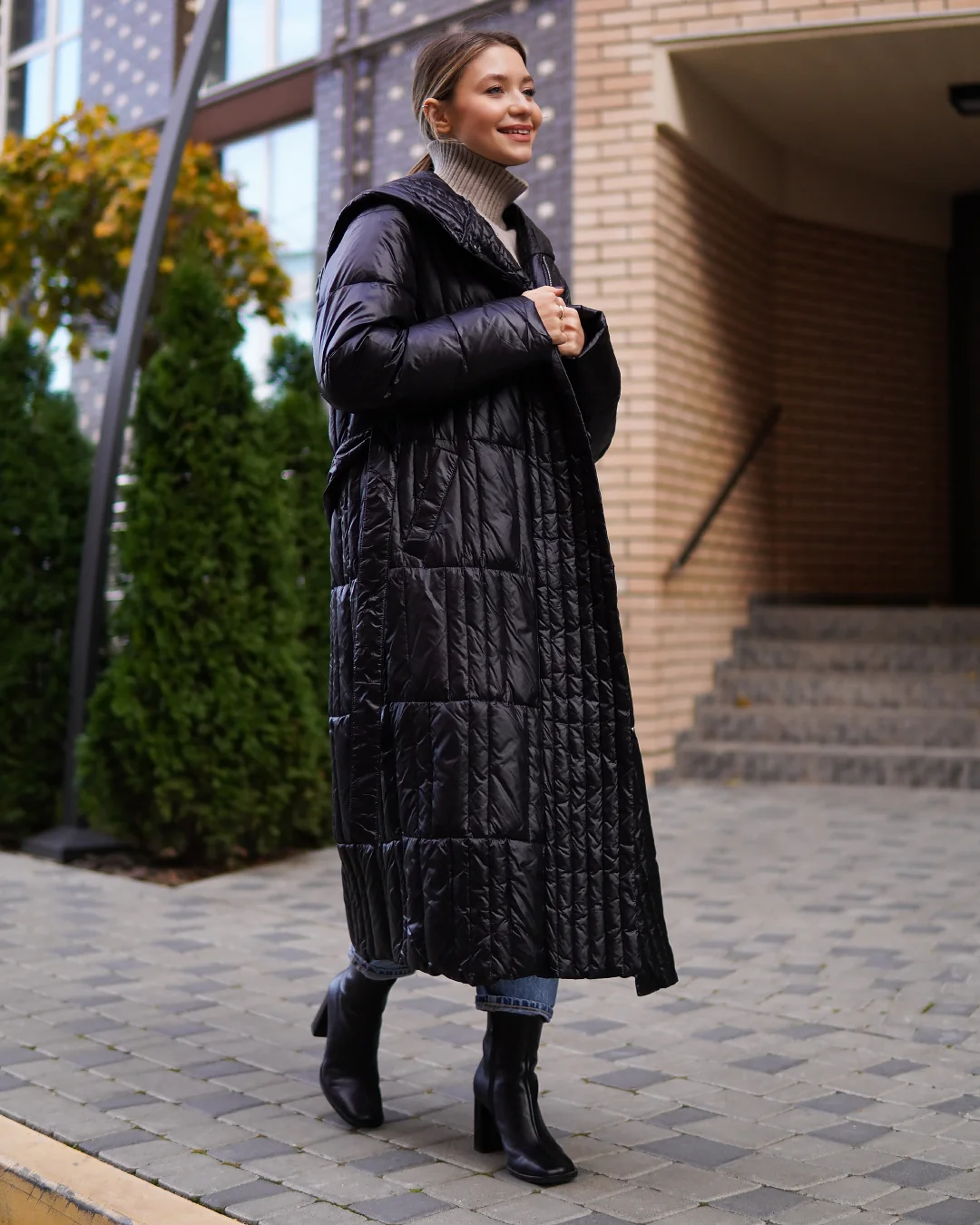
Why quilted chambers matter
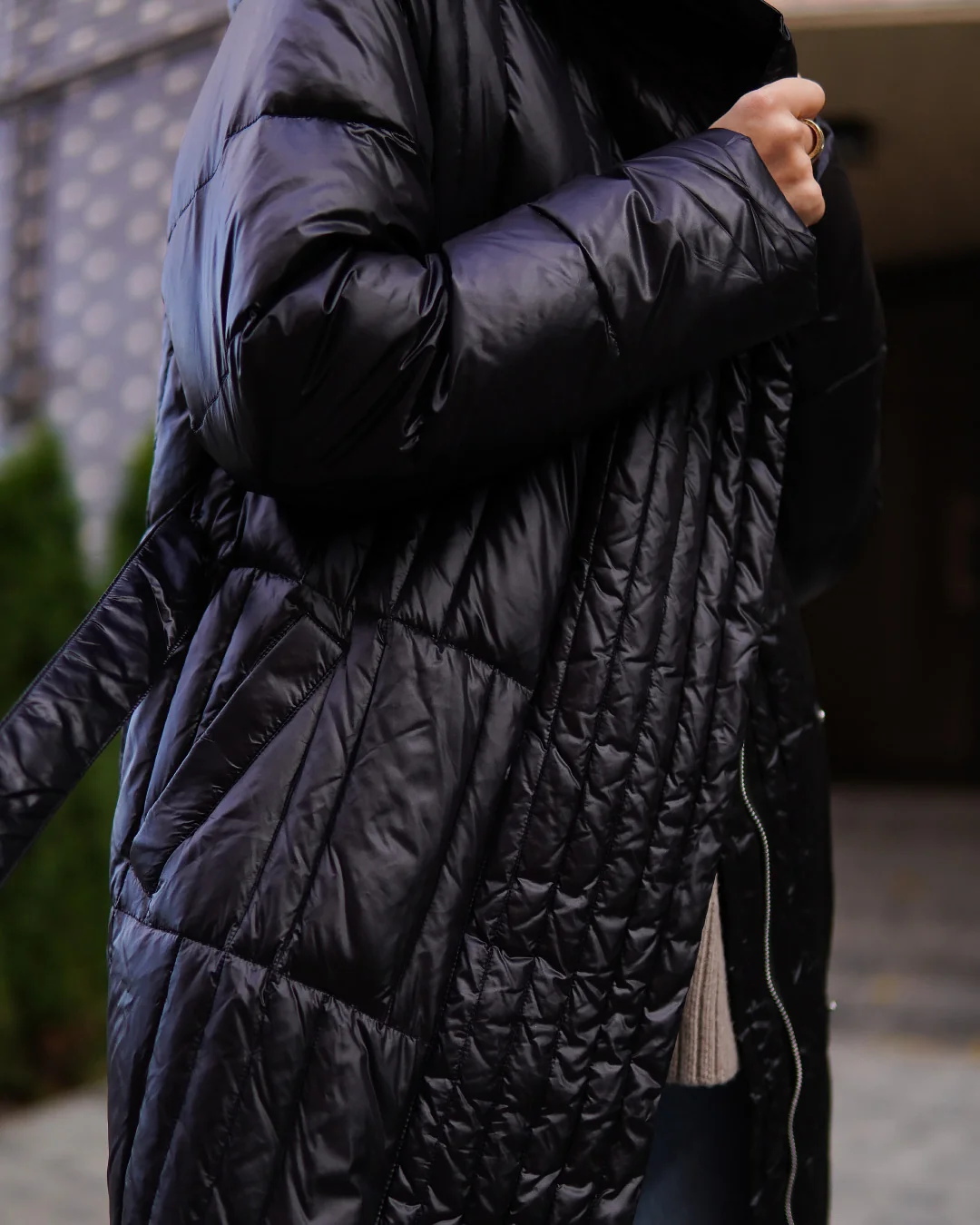
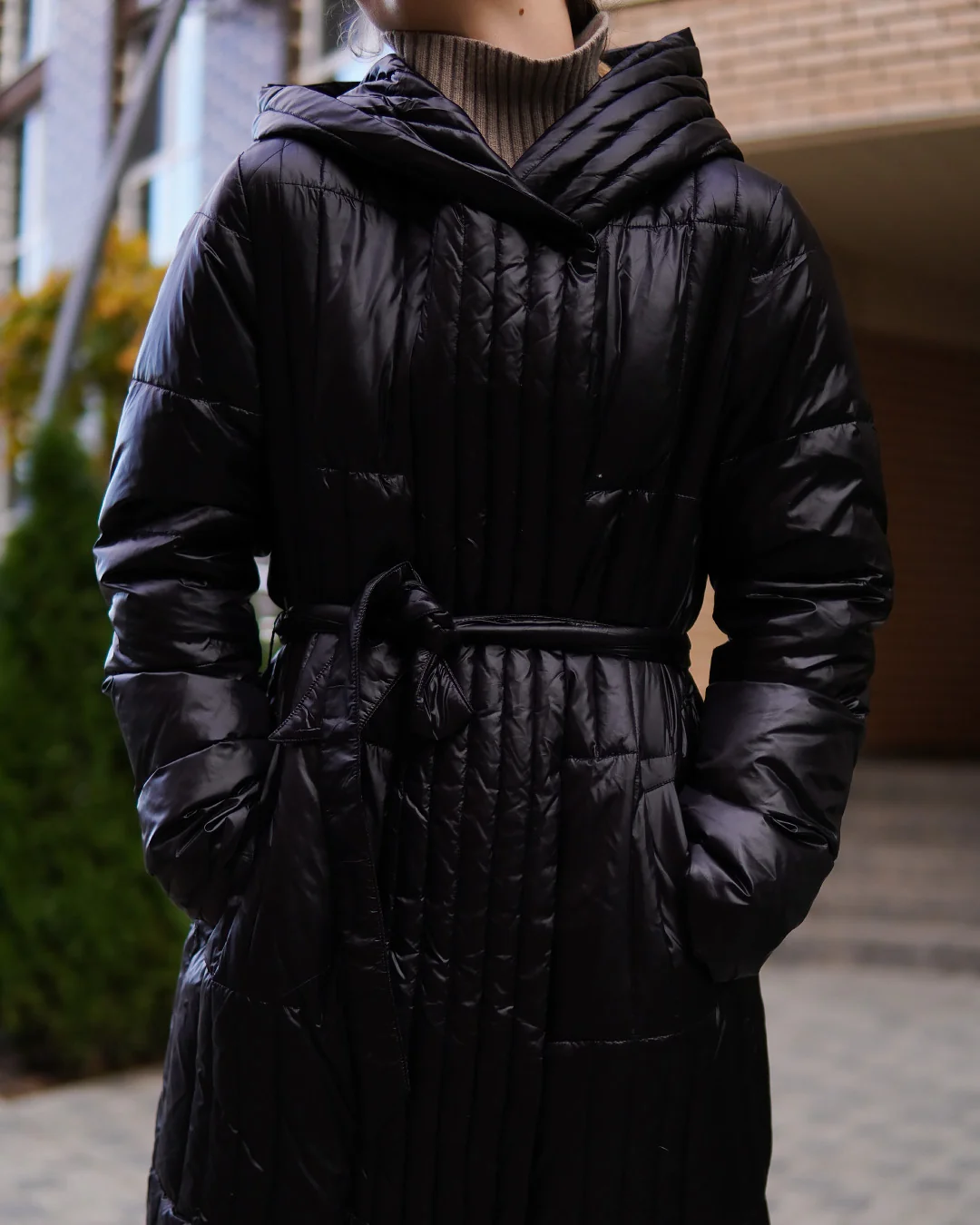
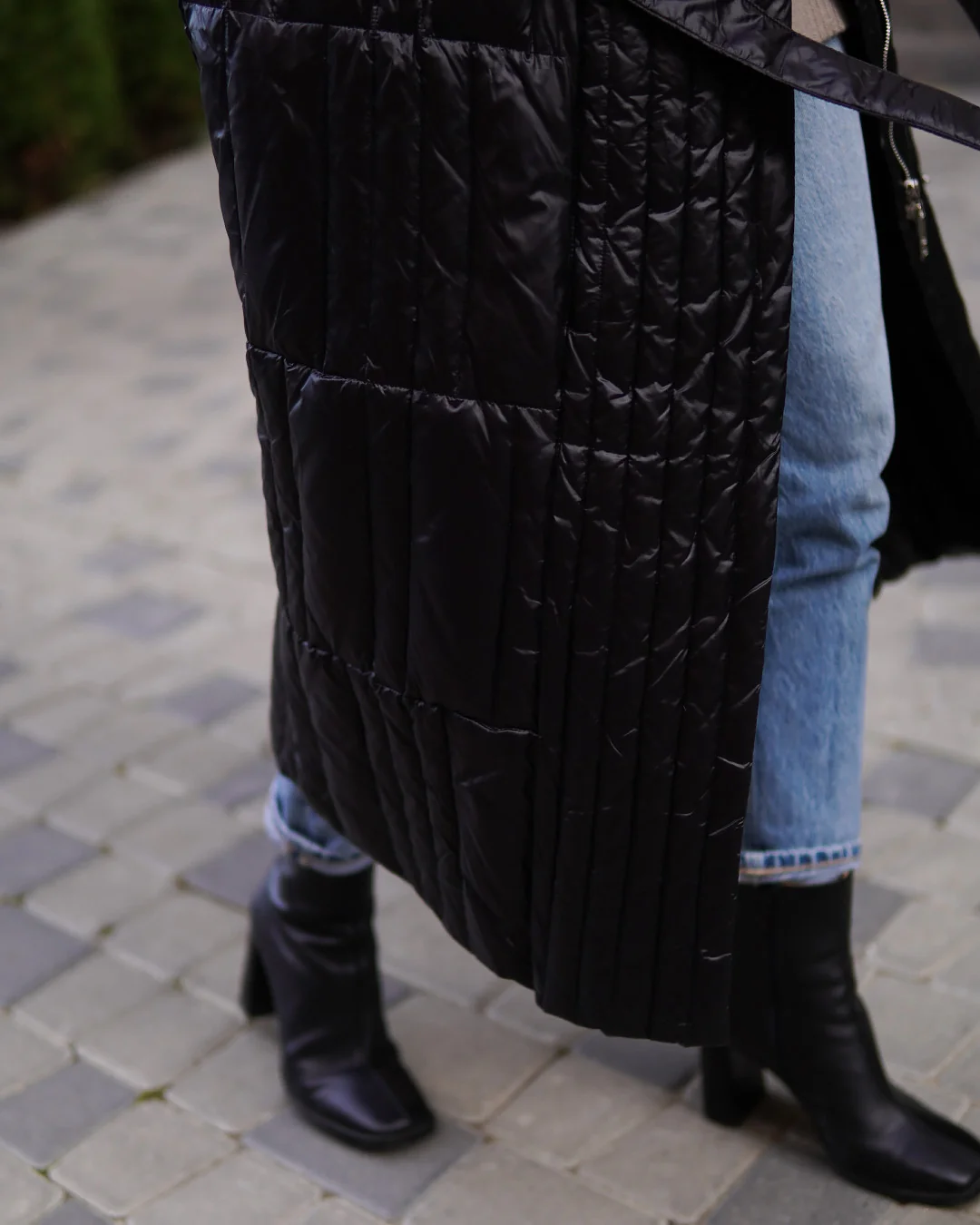
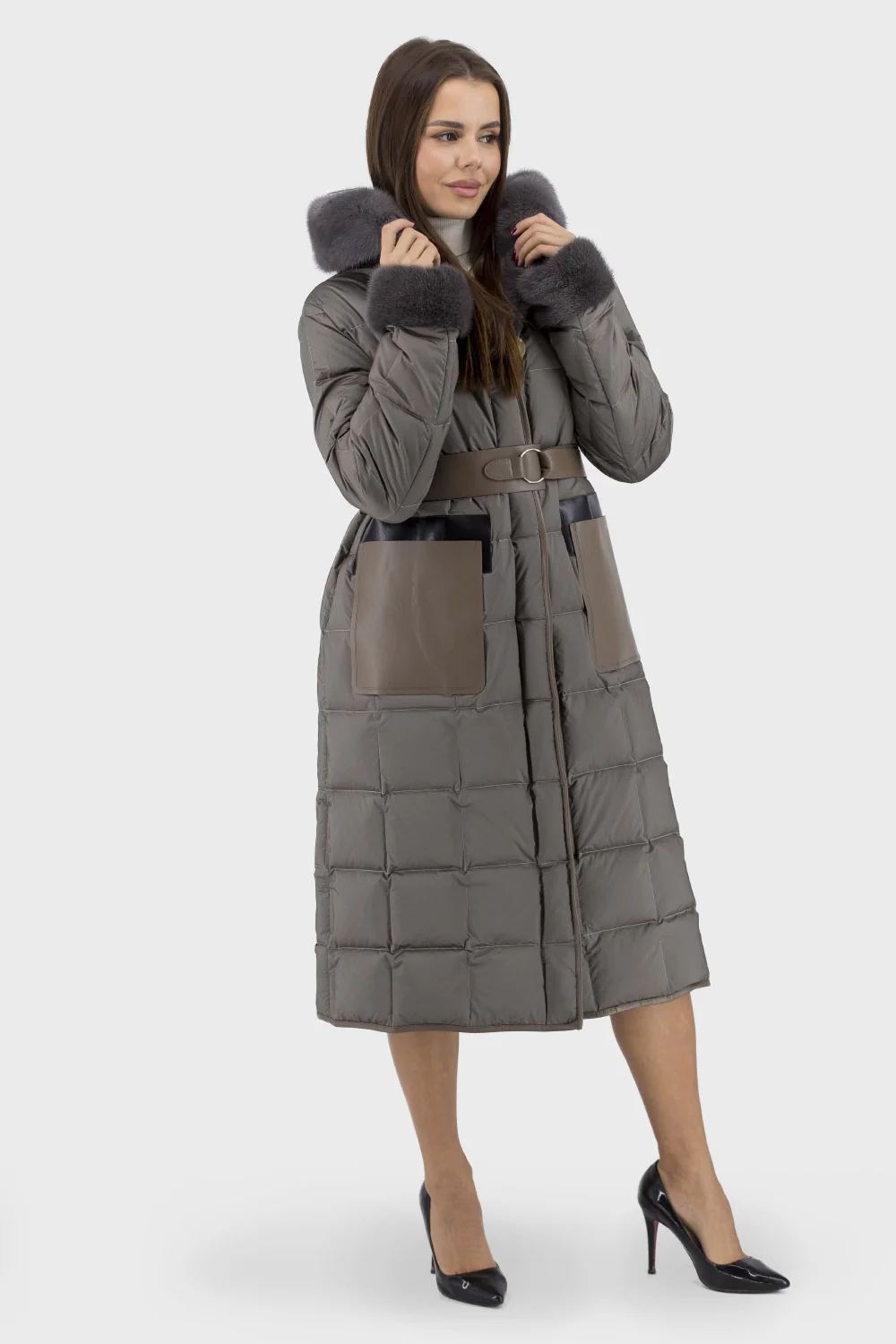
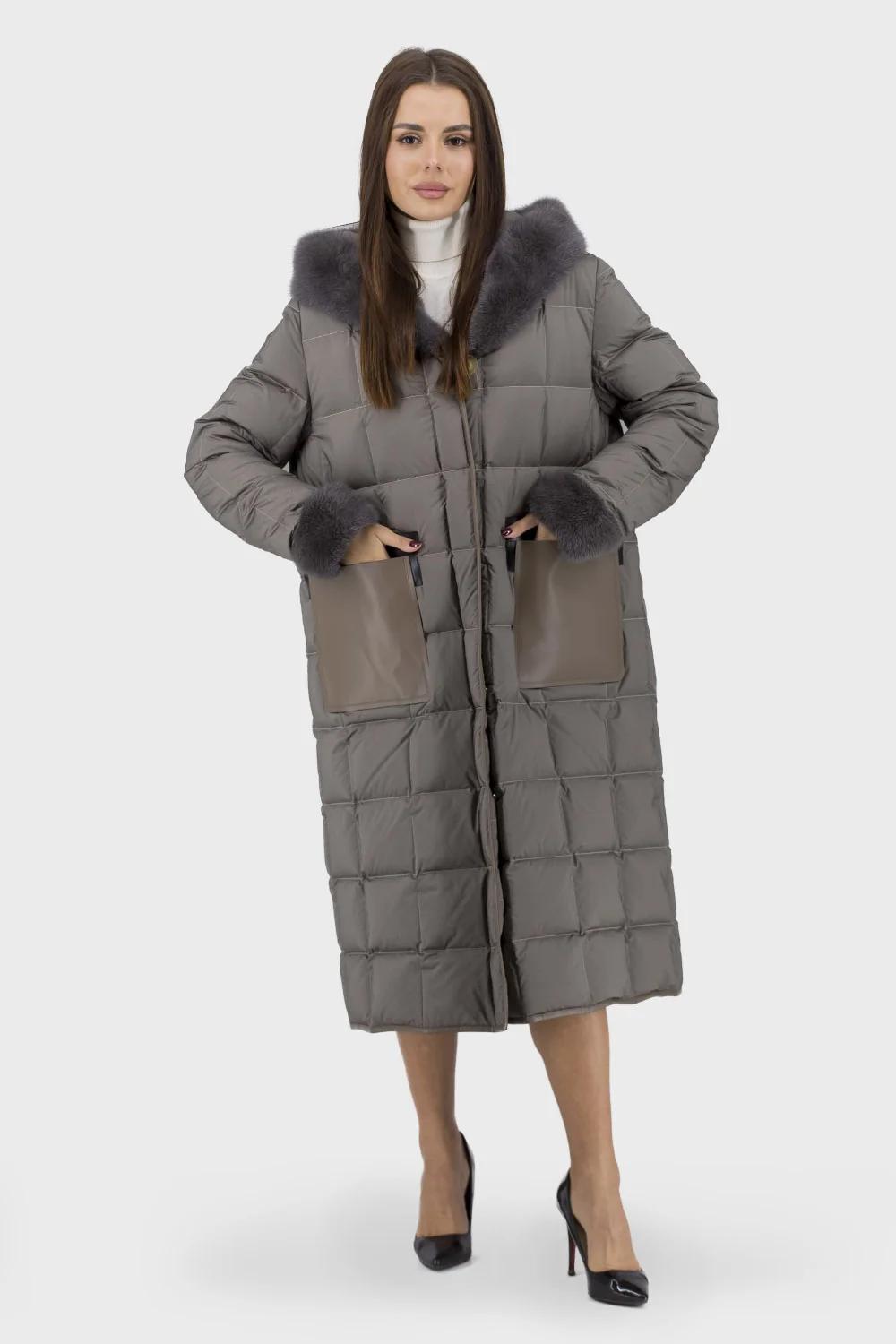
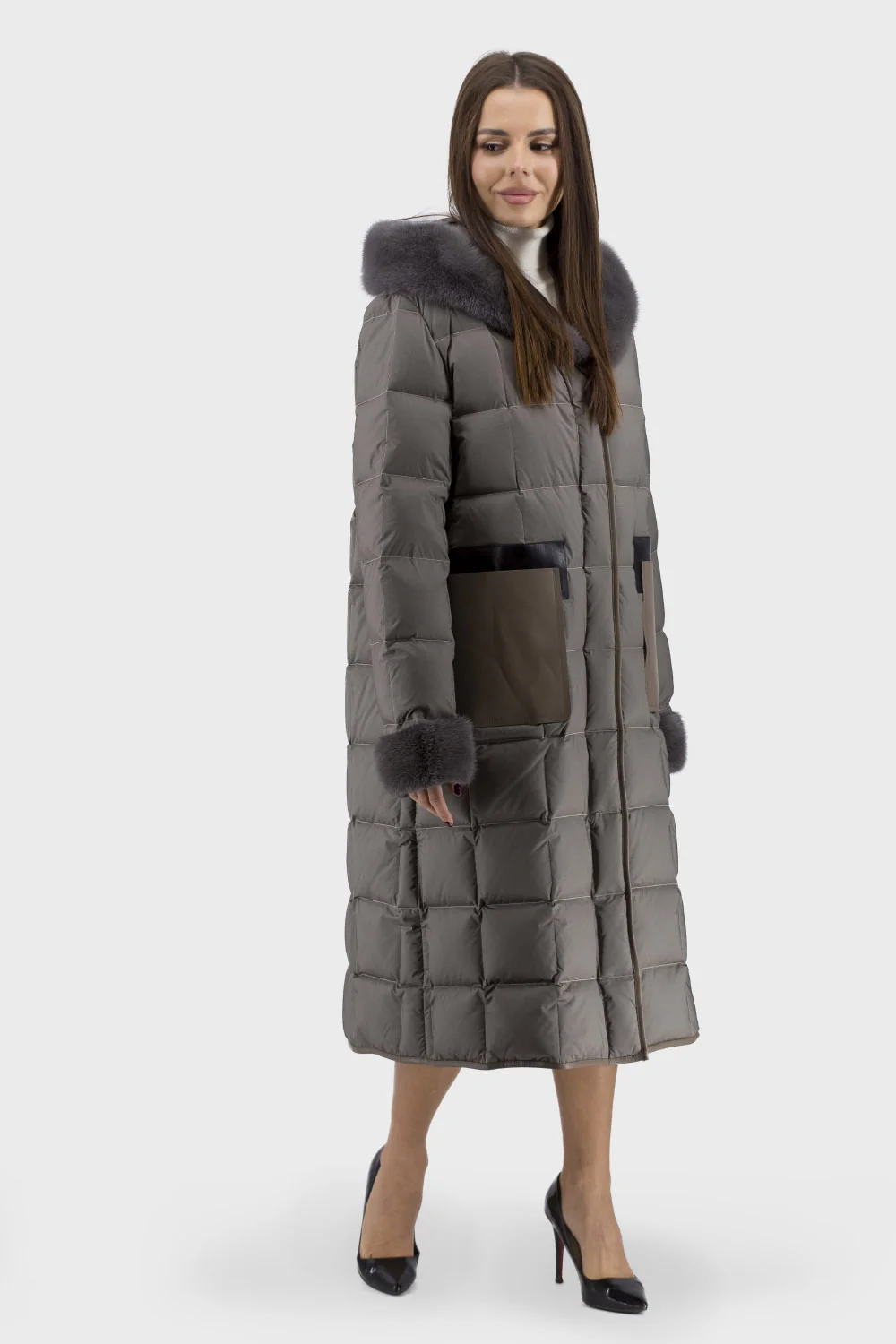
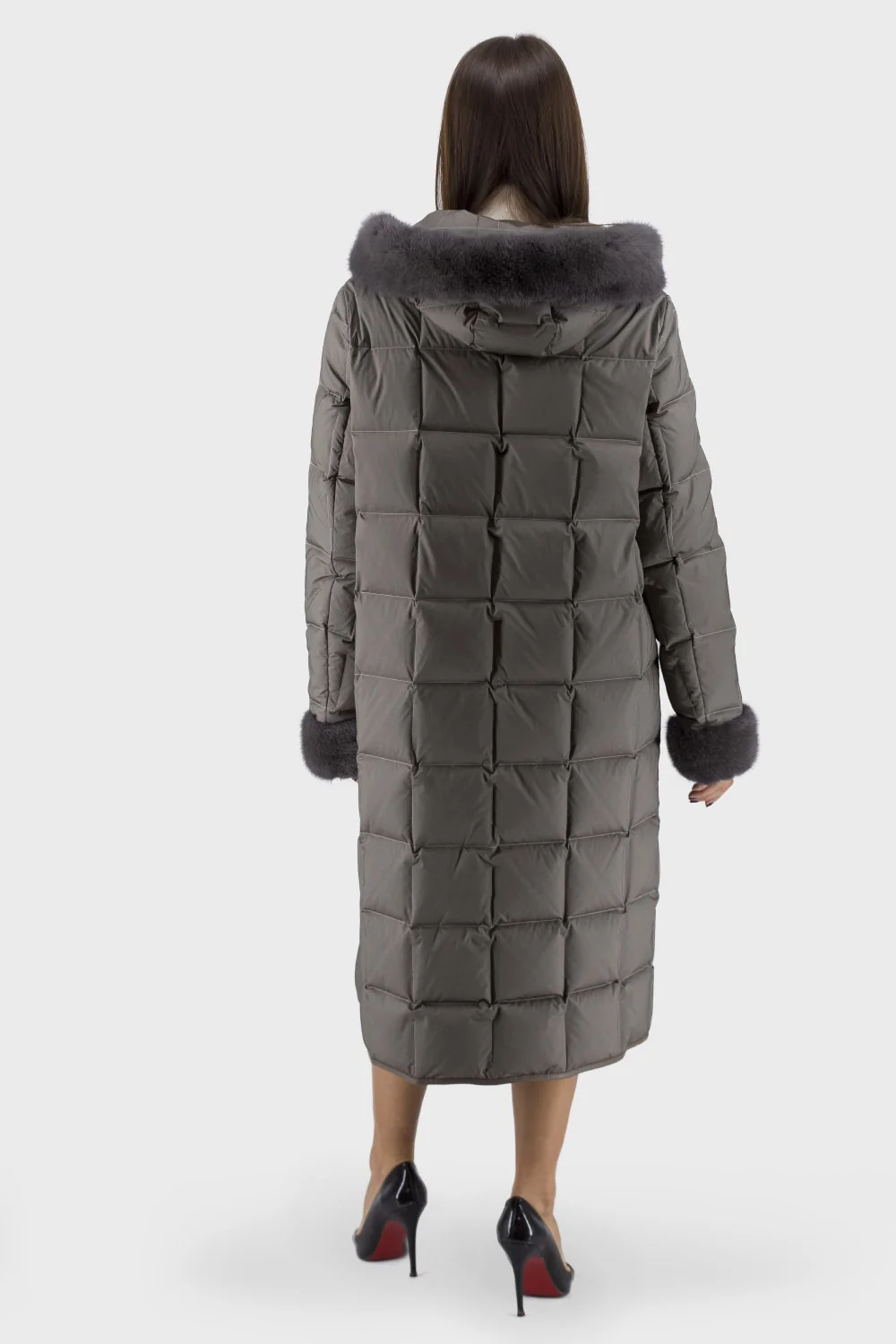
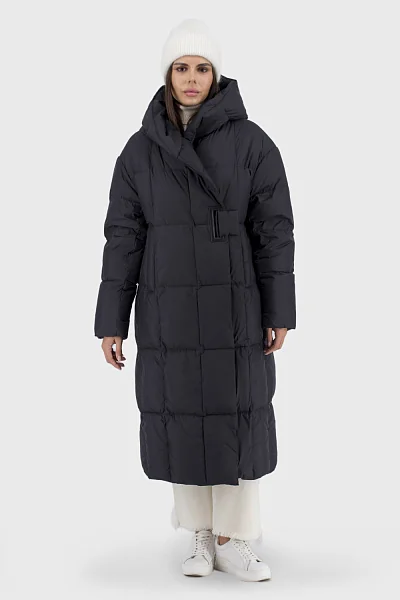
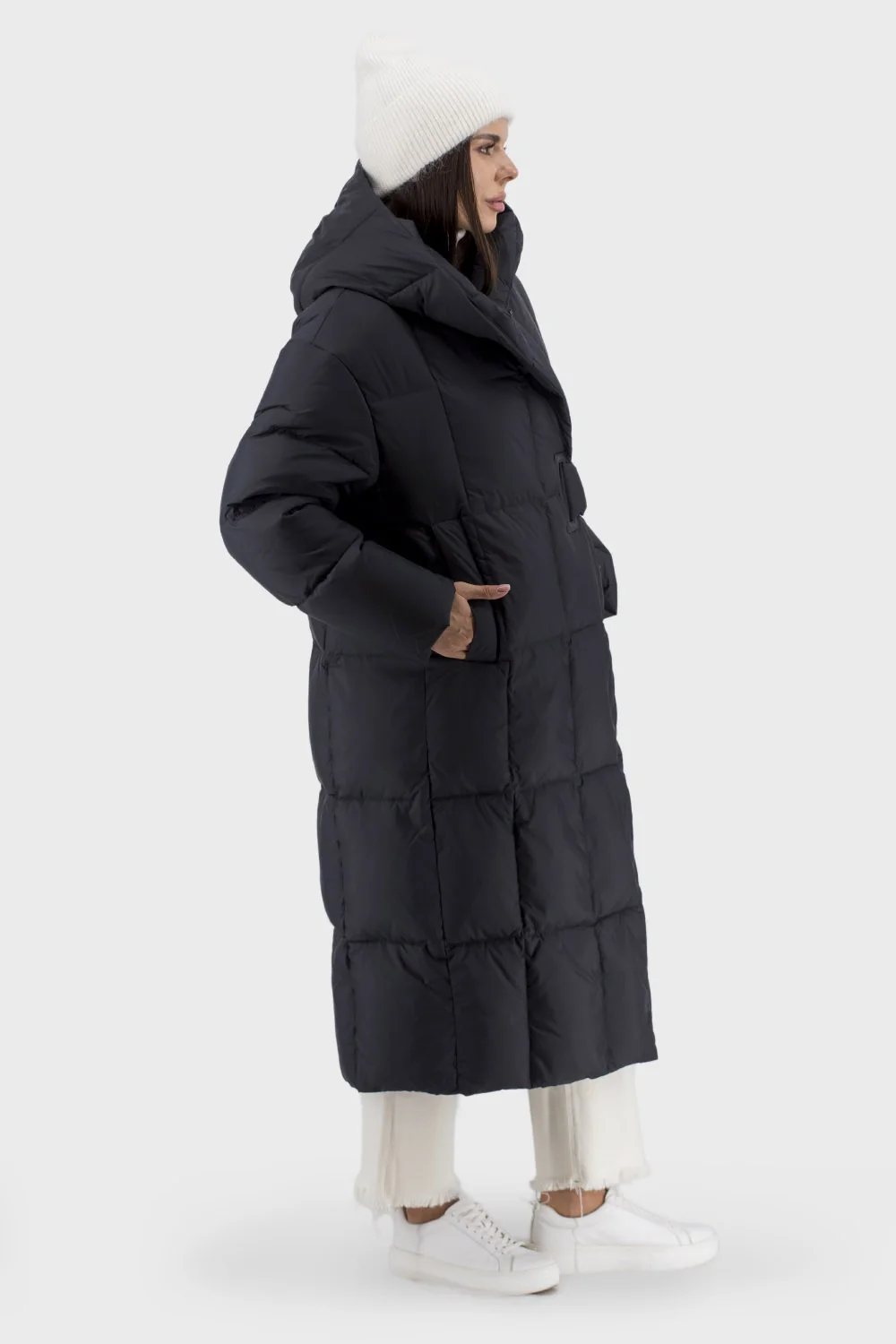
Quilted chambers keep the filling in position and prevent it from moving through the garment.
Even distribution helps maintain consistent warmth across the coat.
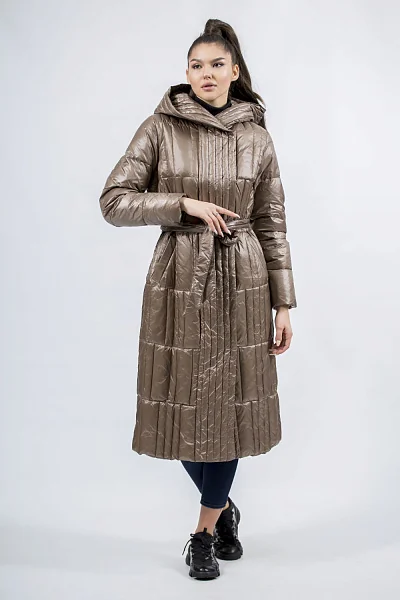
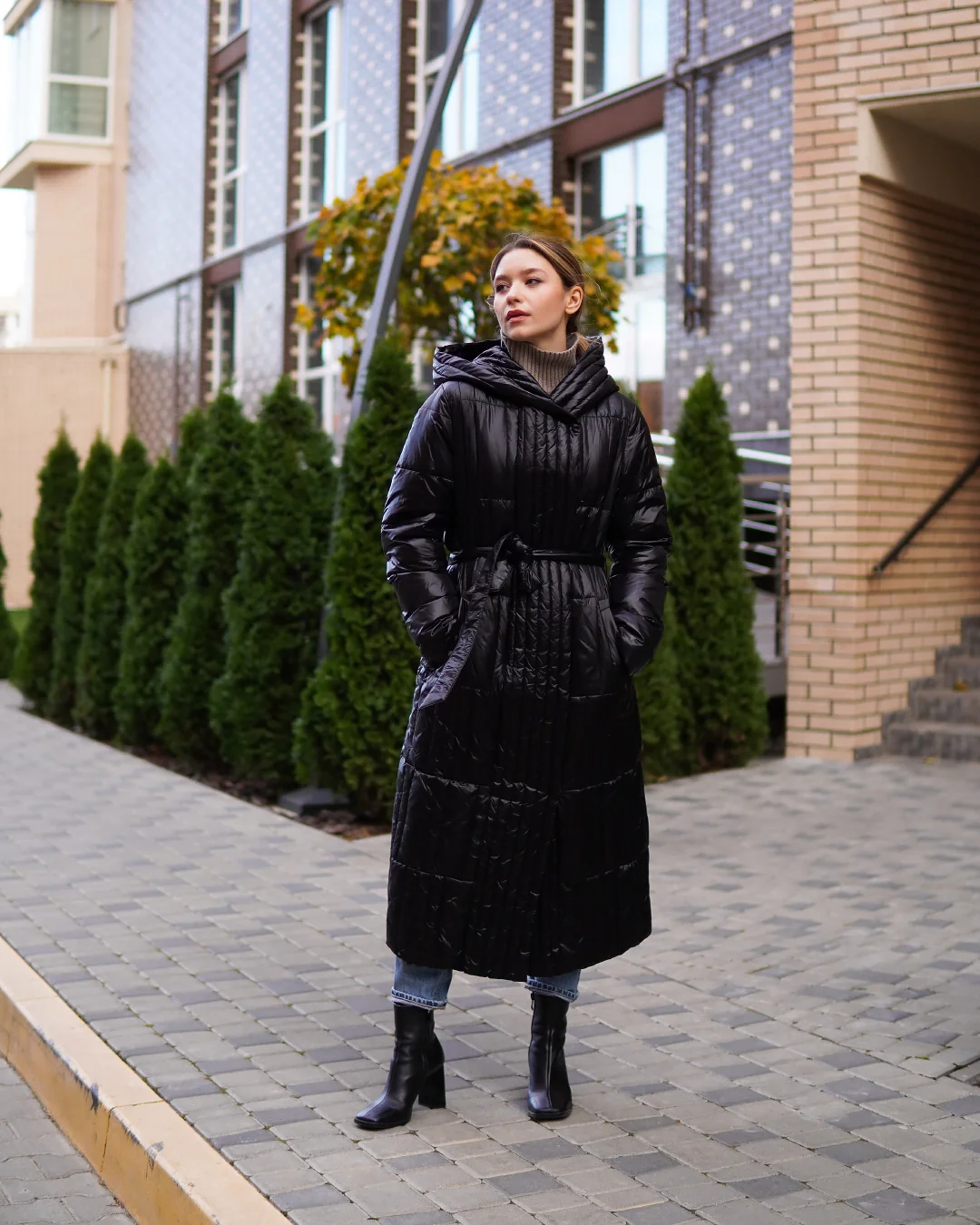
Choosing a down coat for city wear
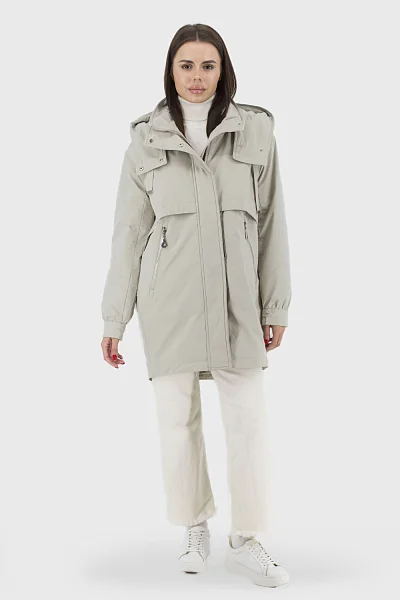
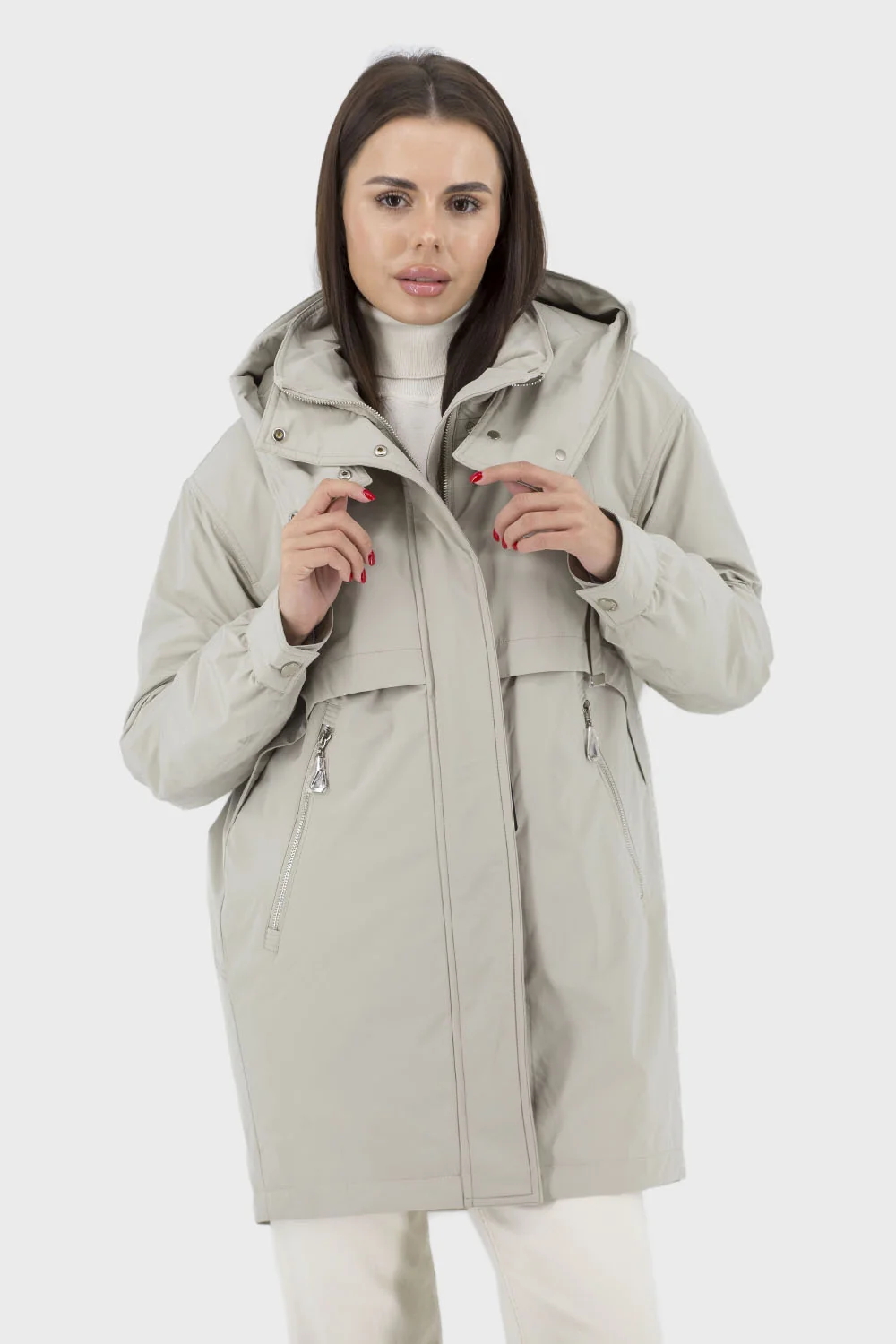
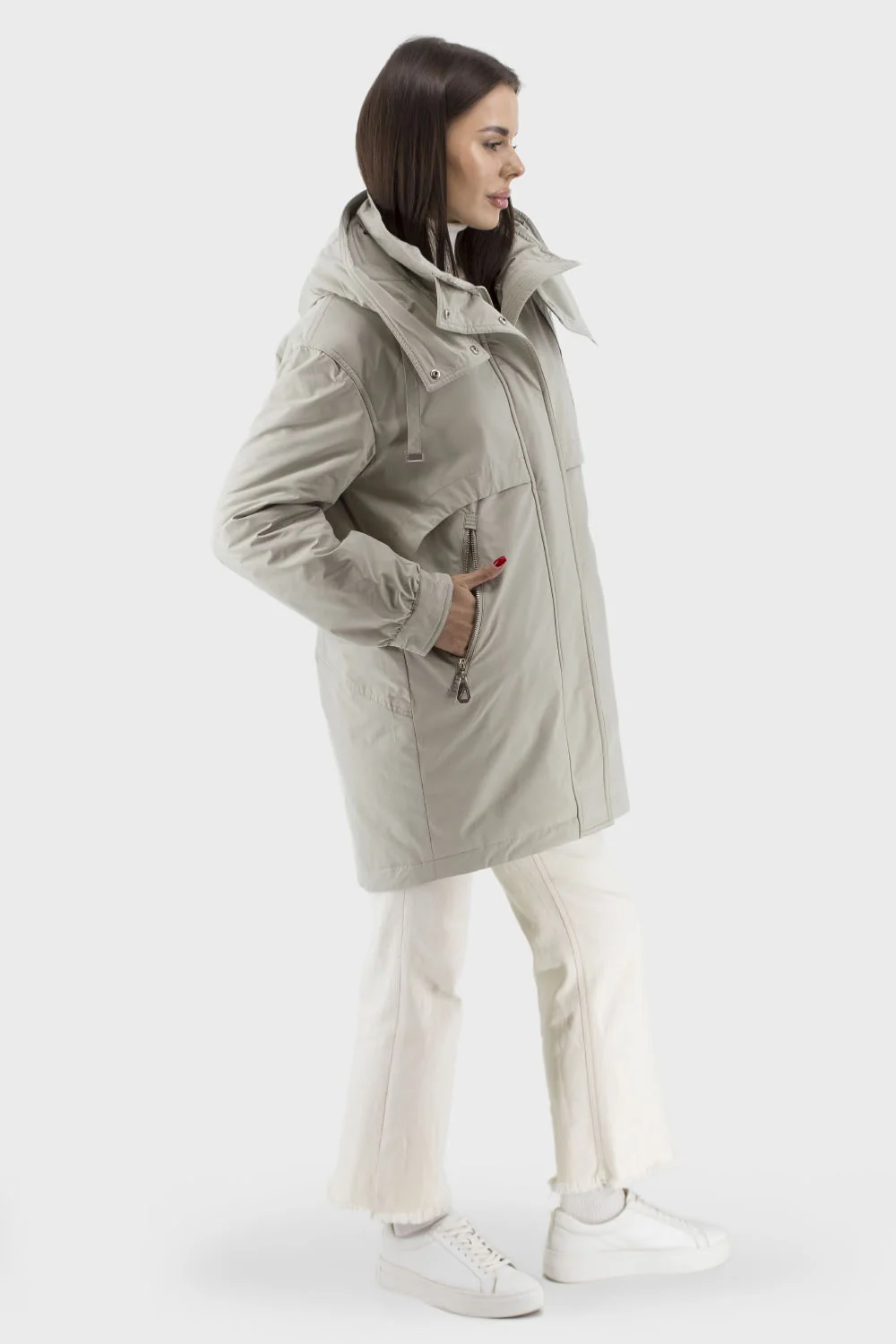
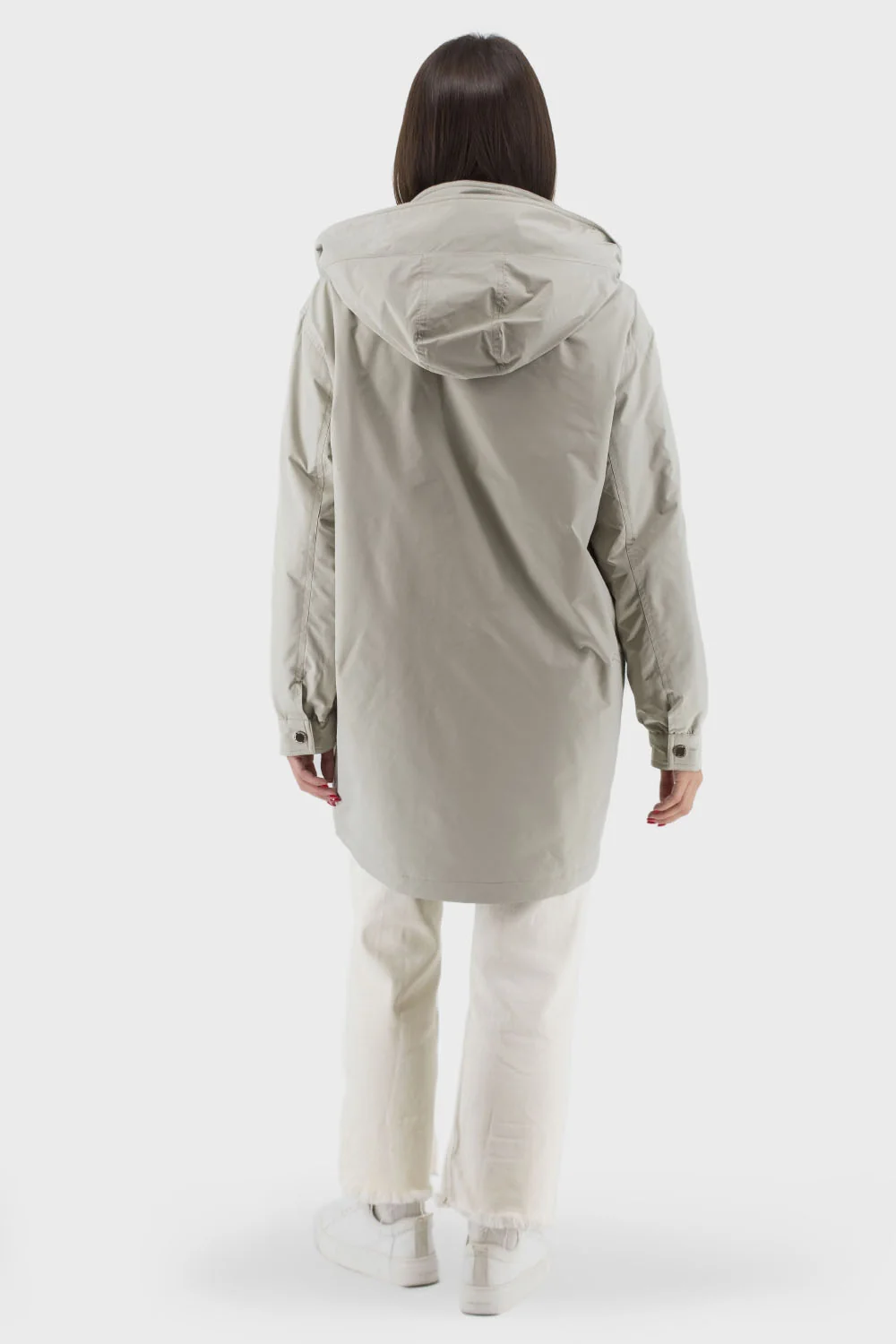
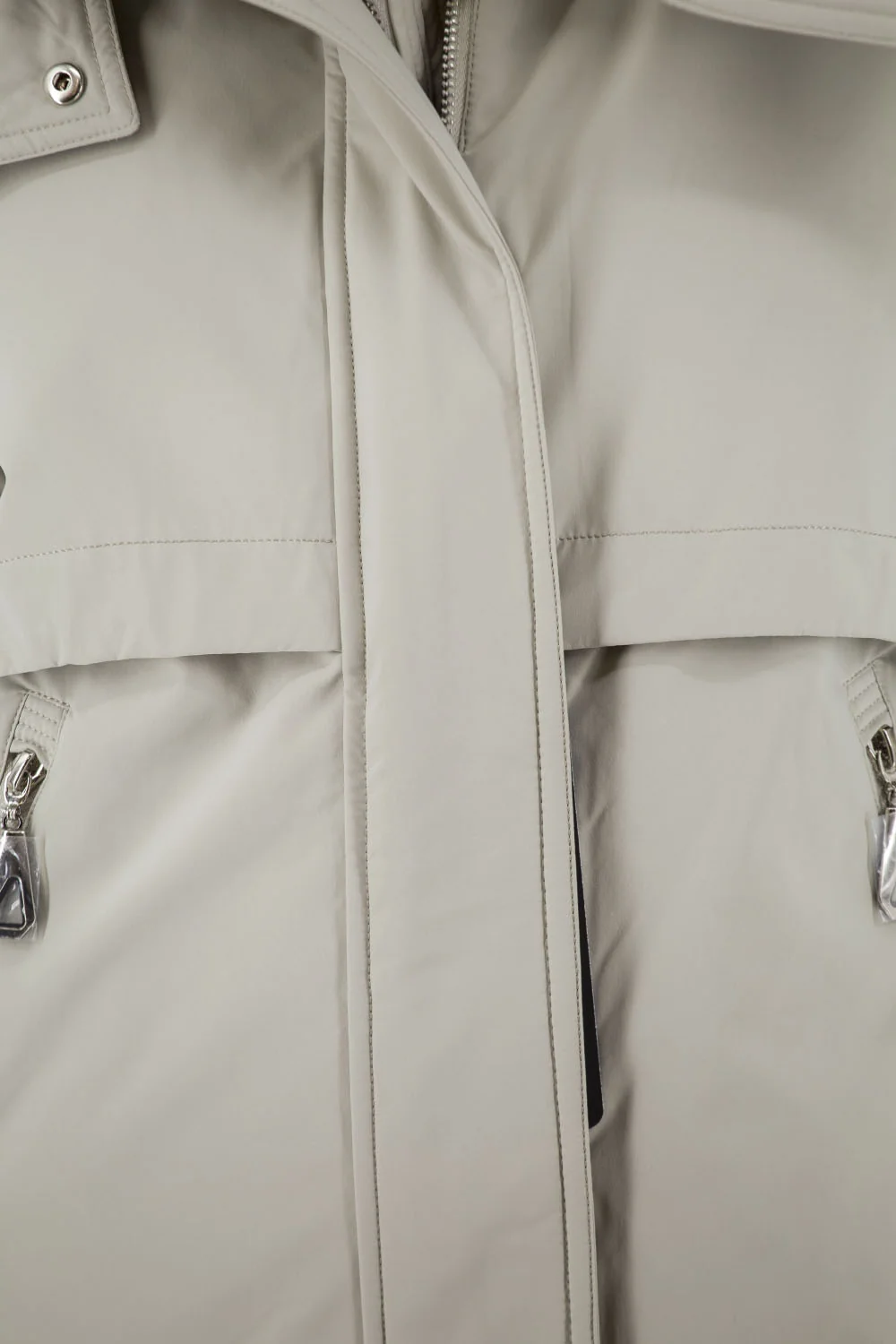
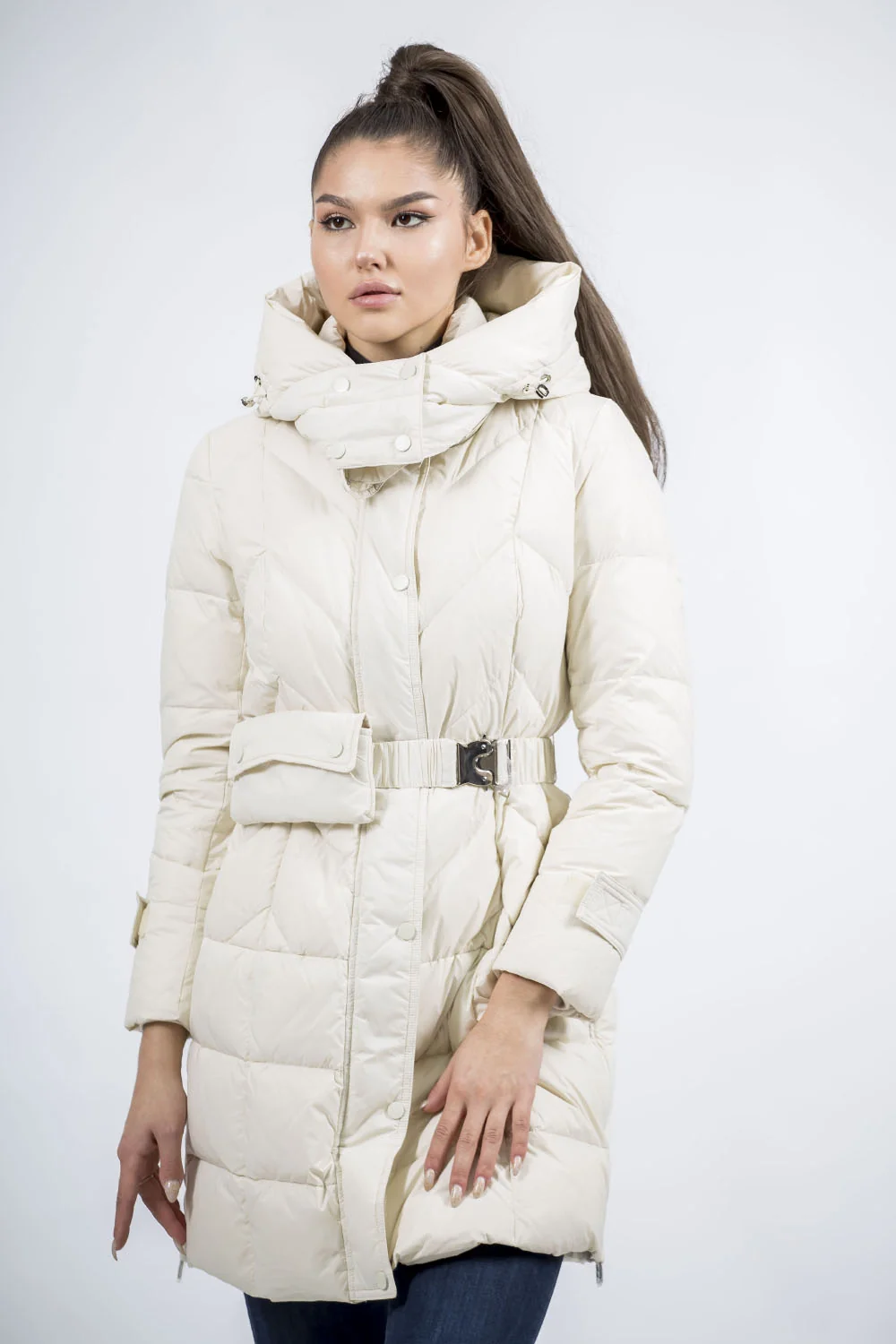
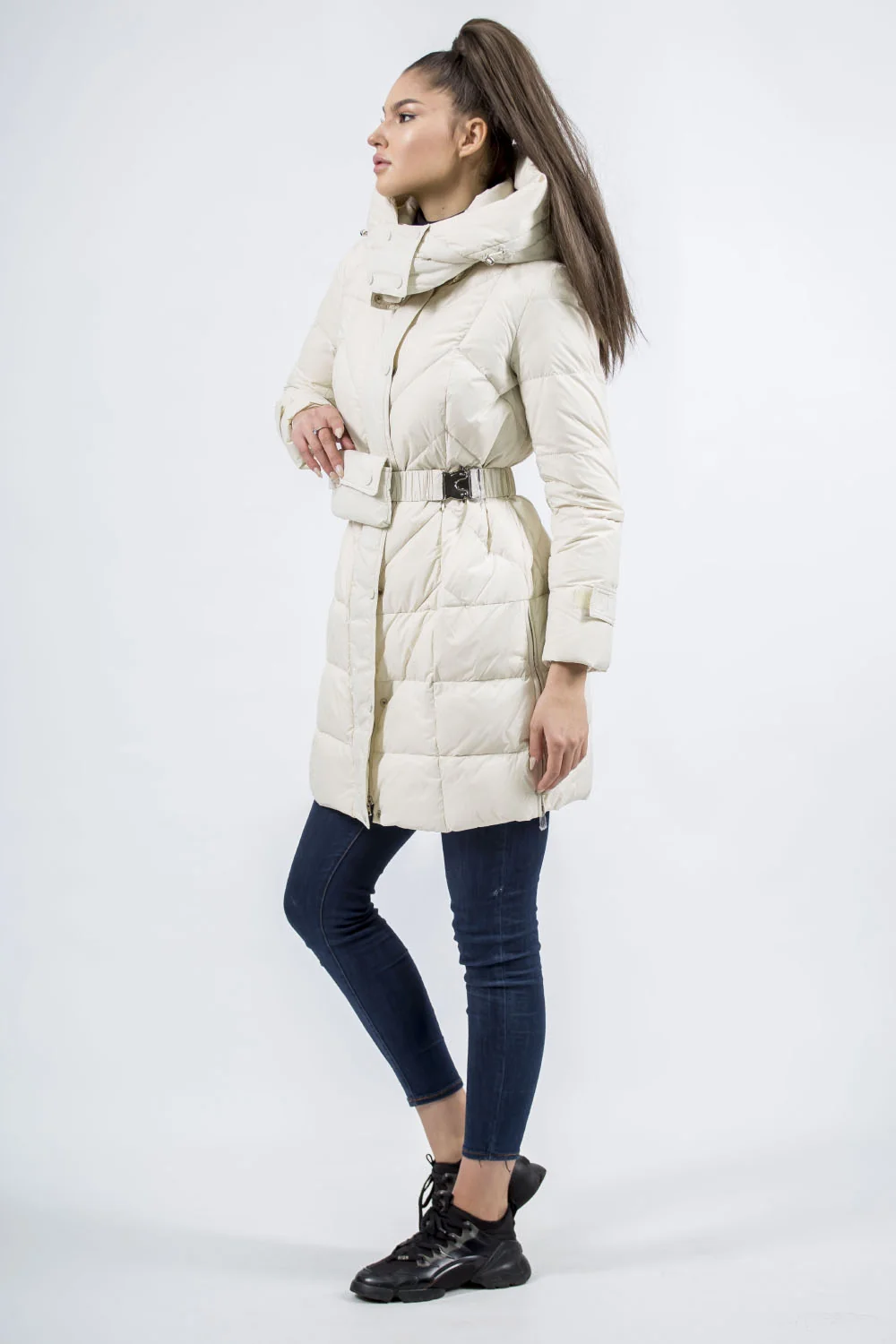
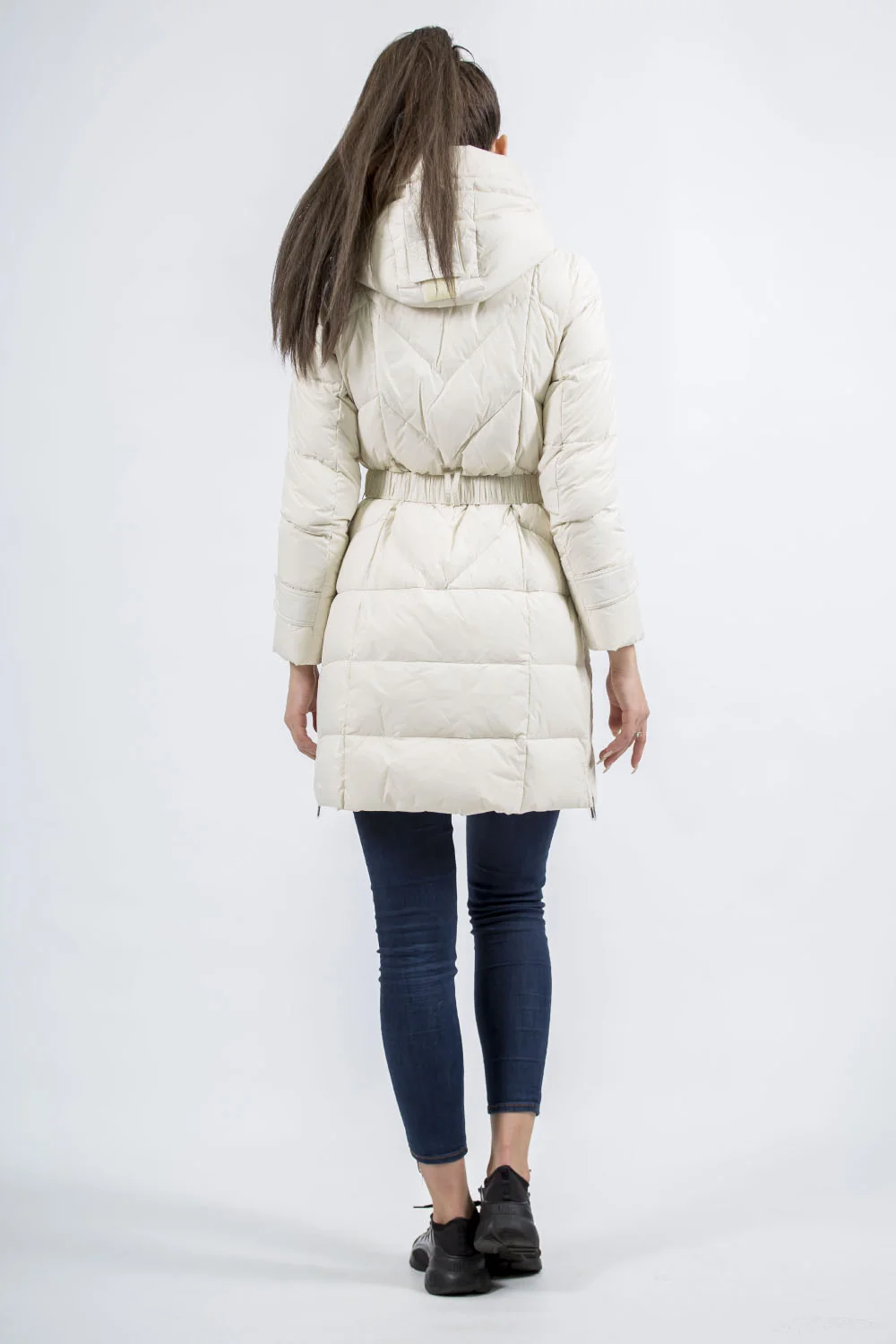
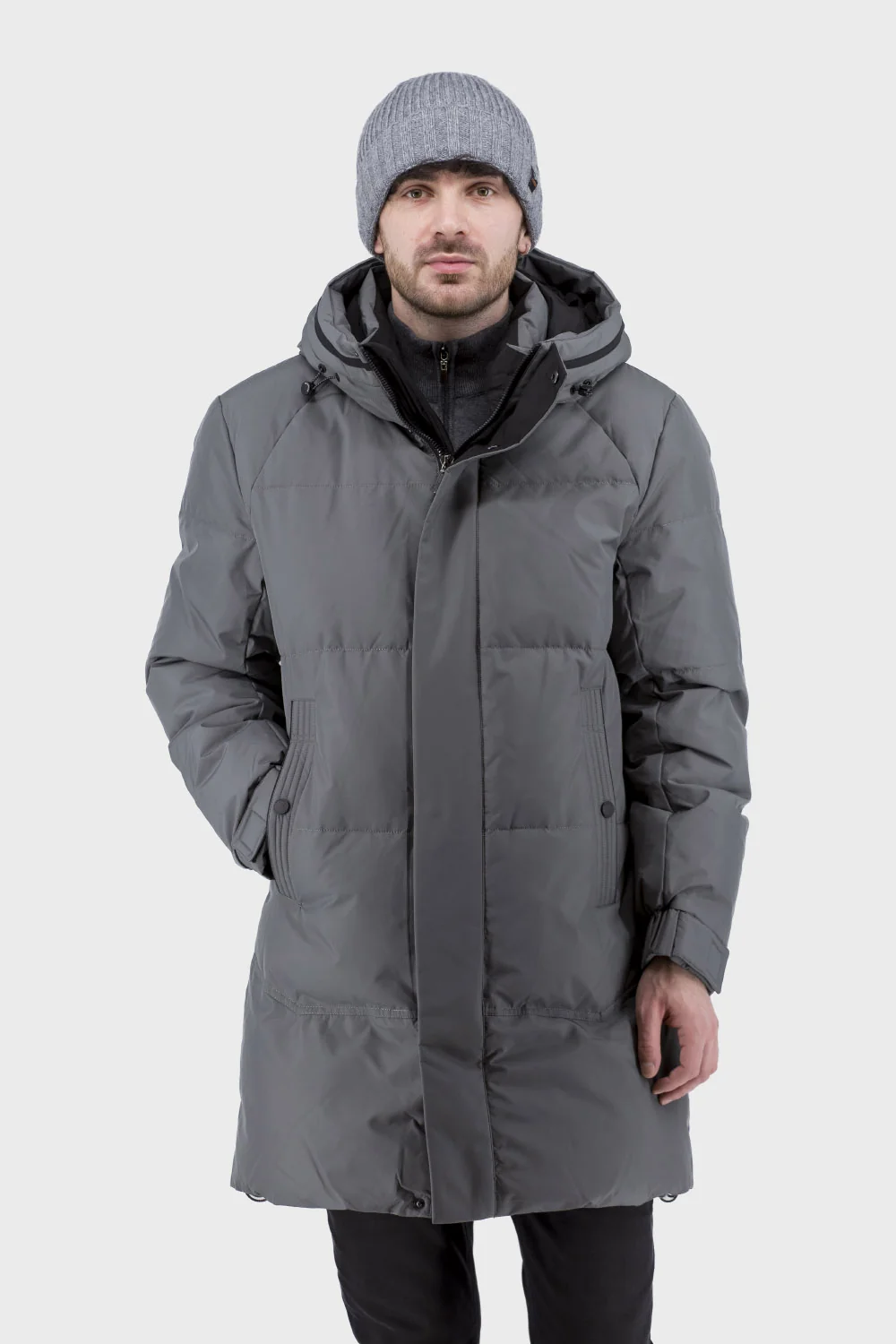
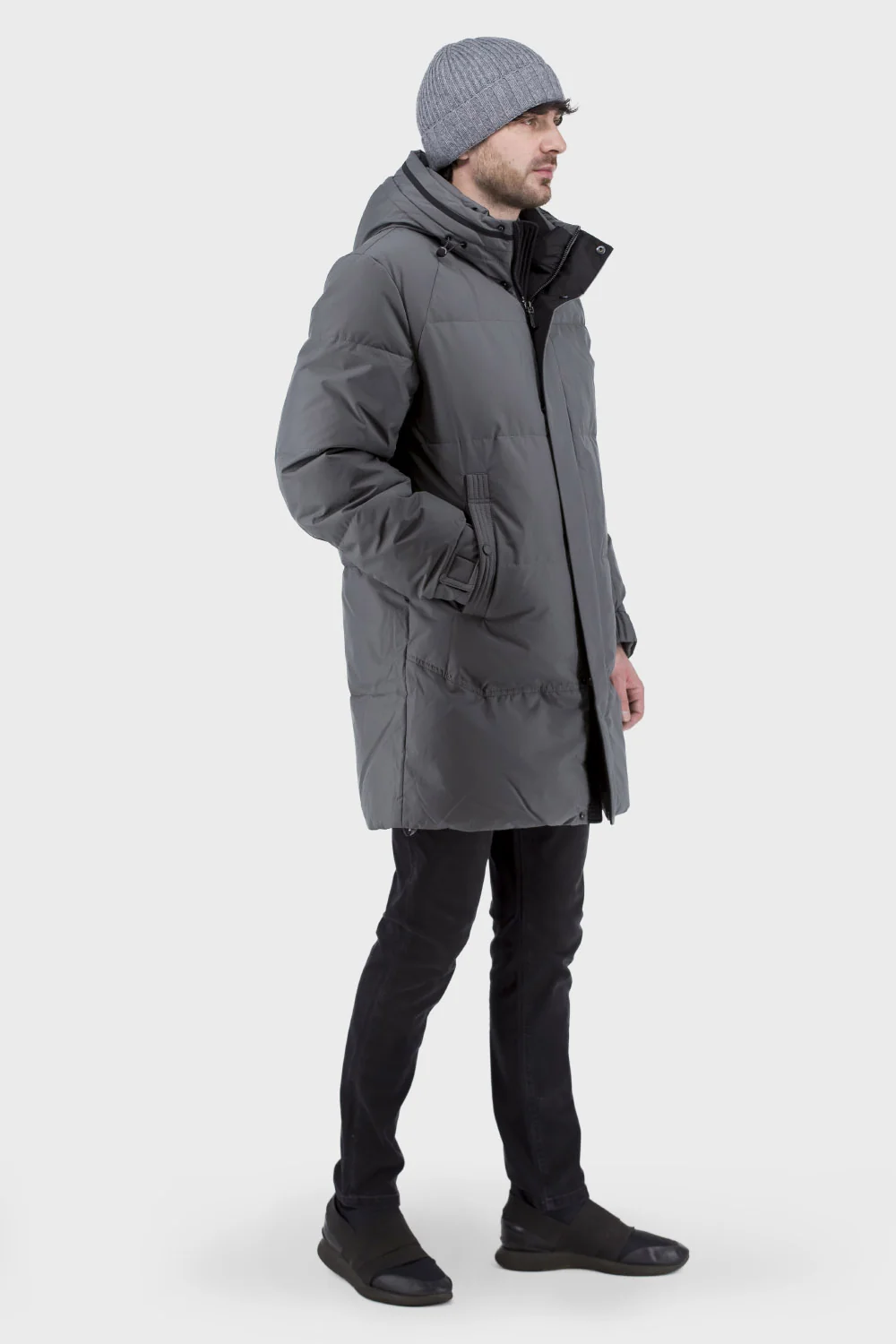
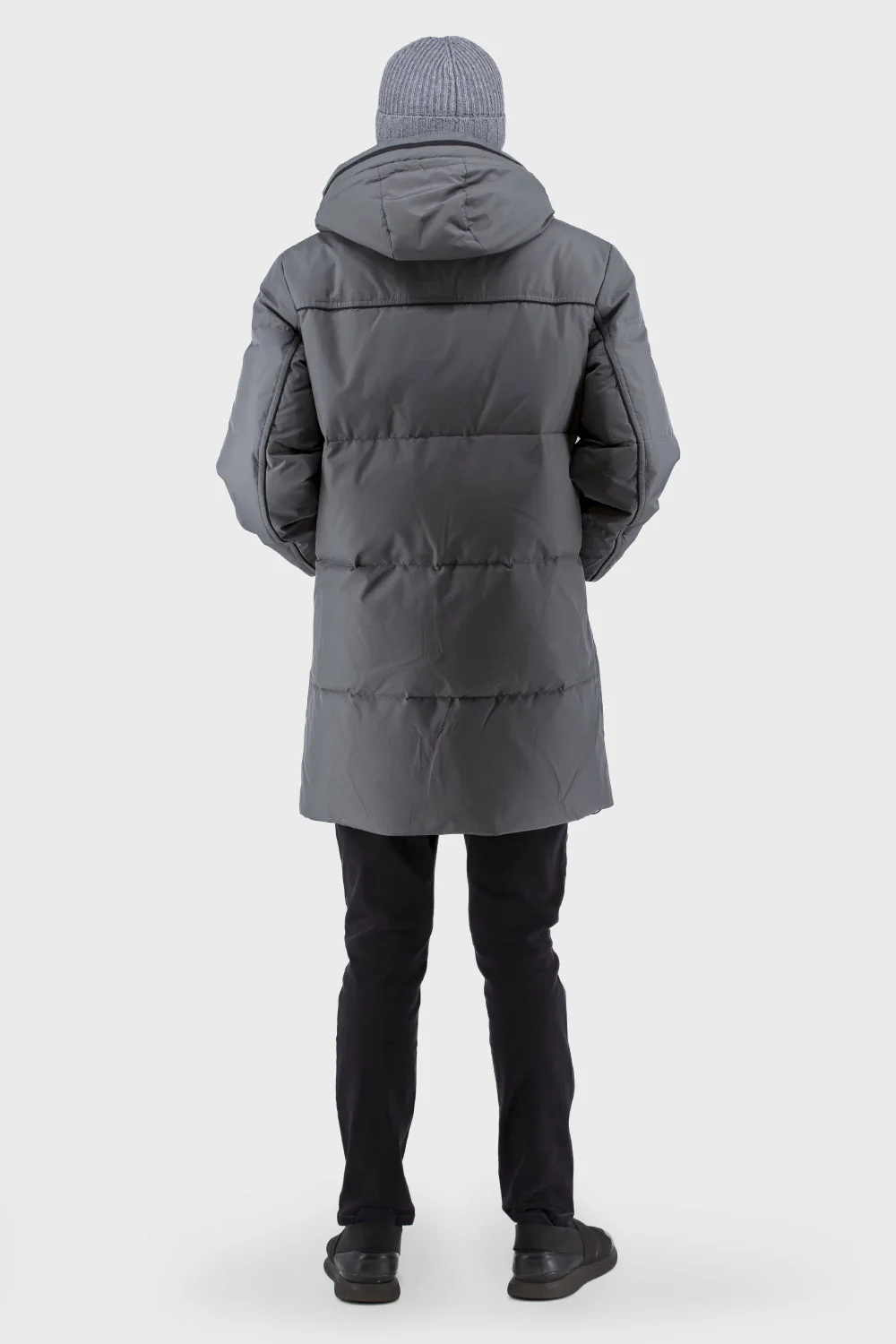
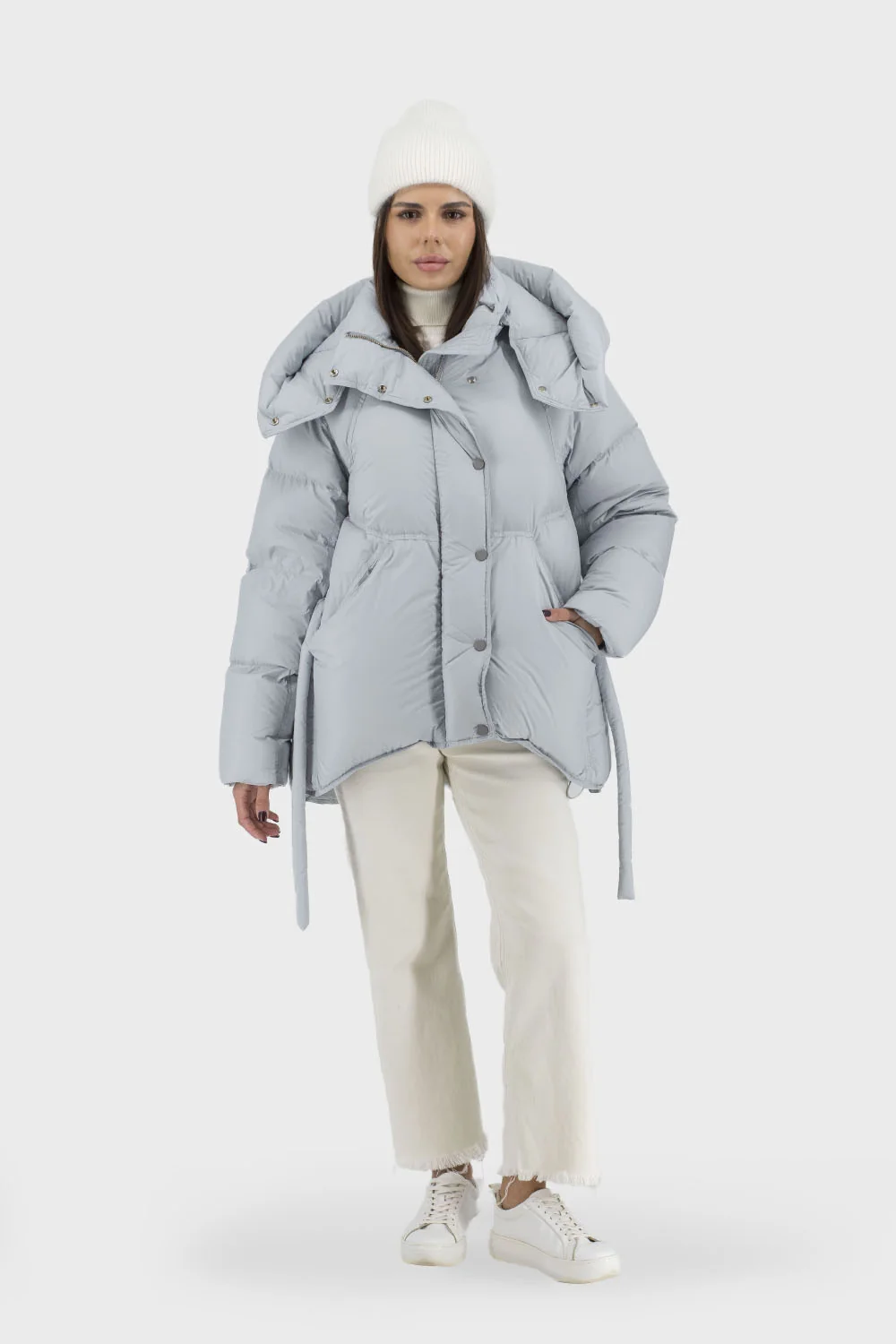
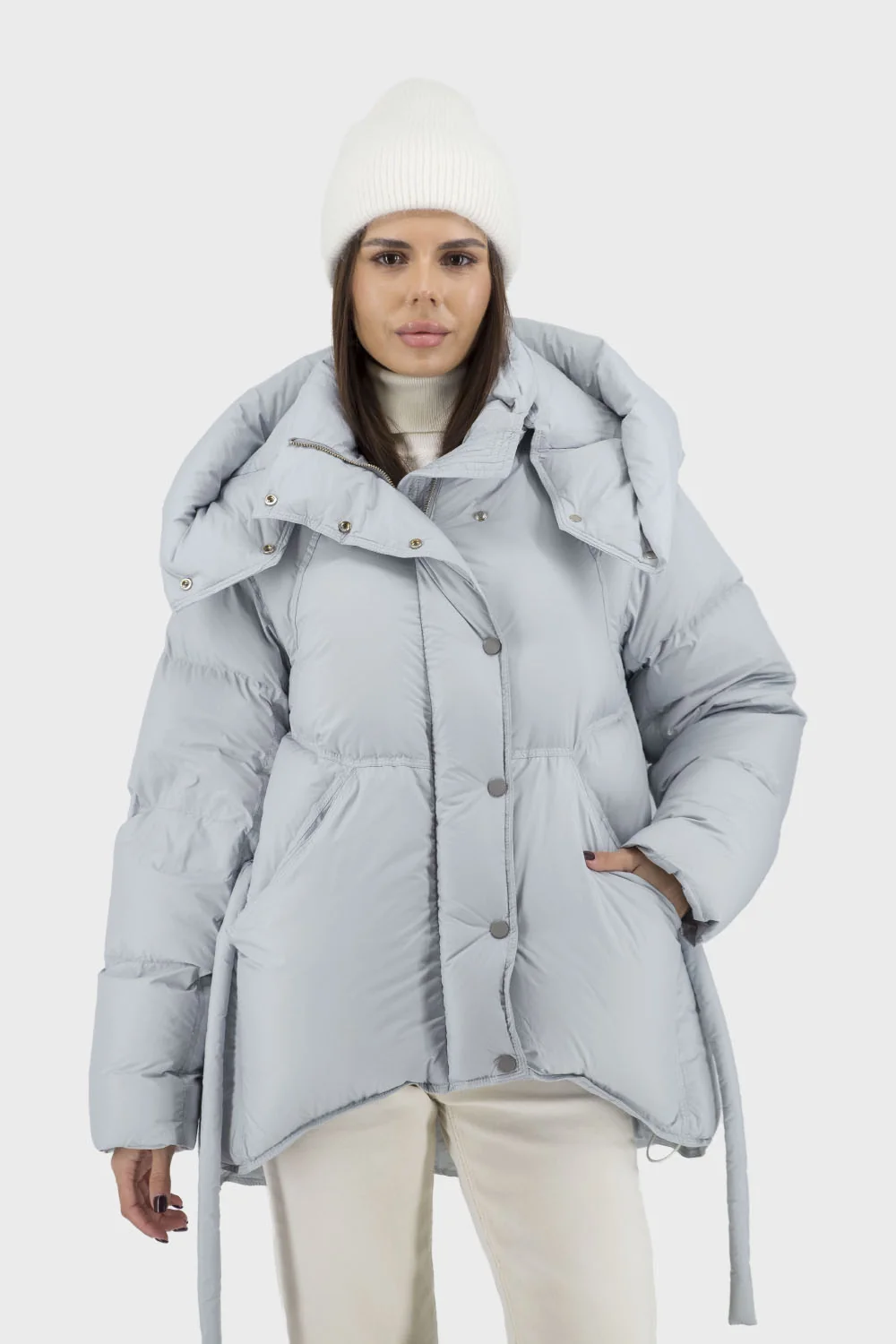
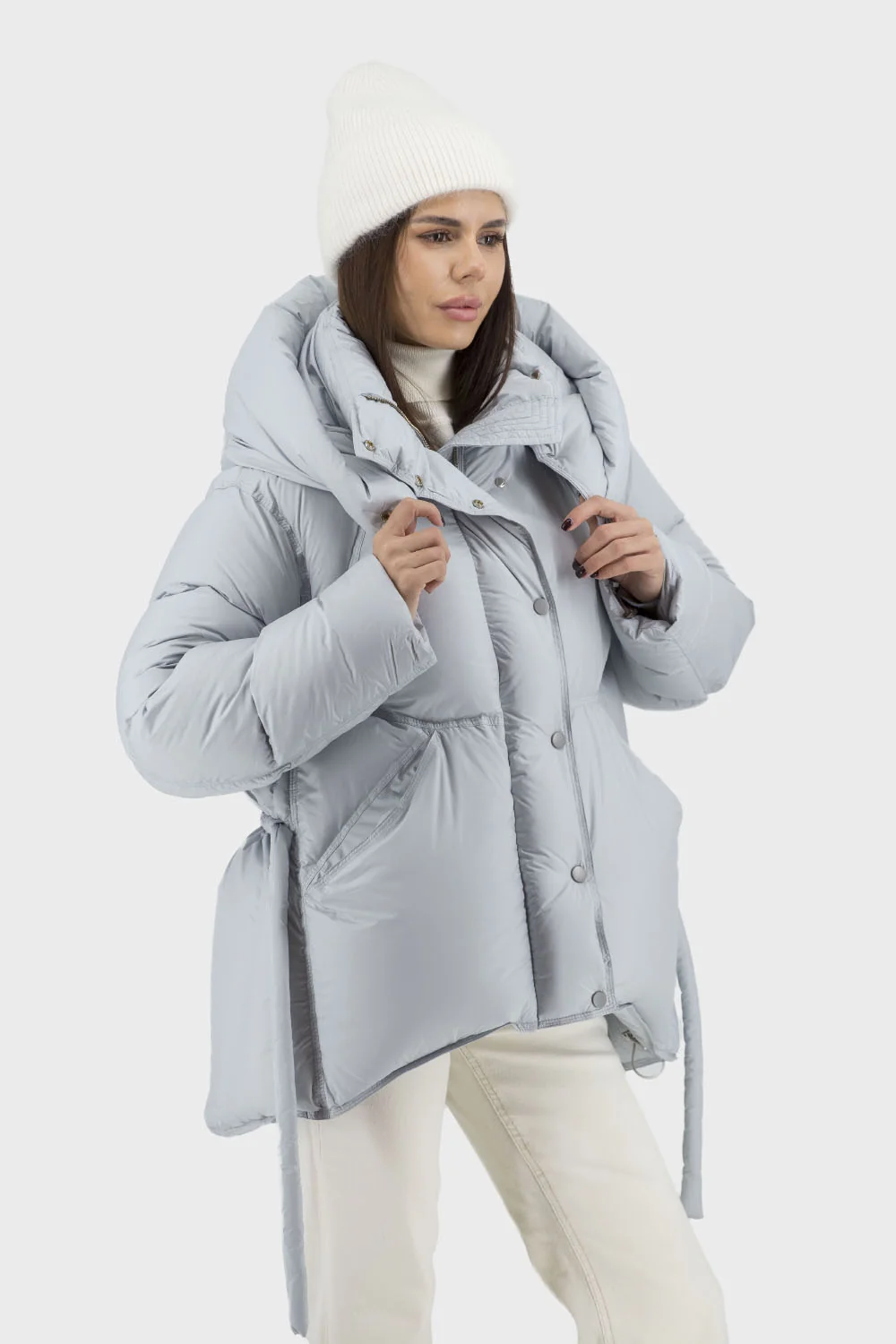
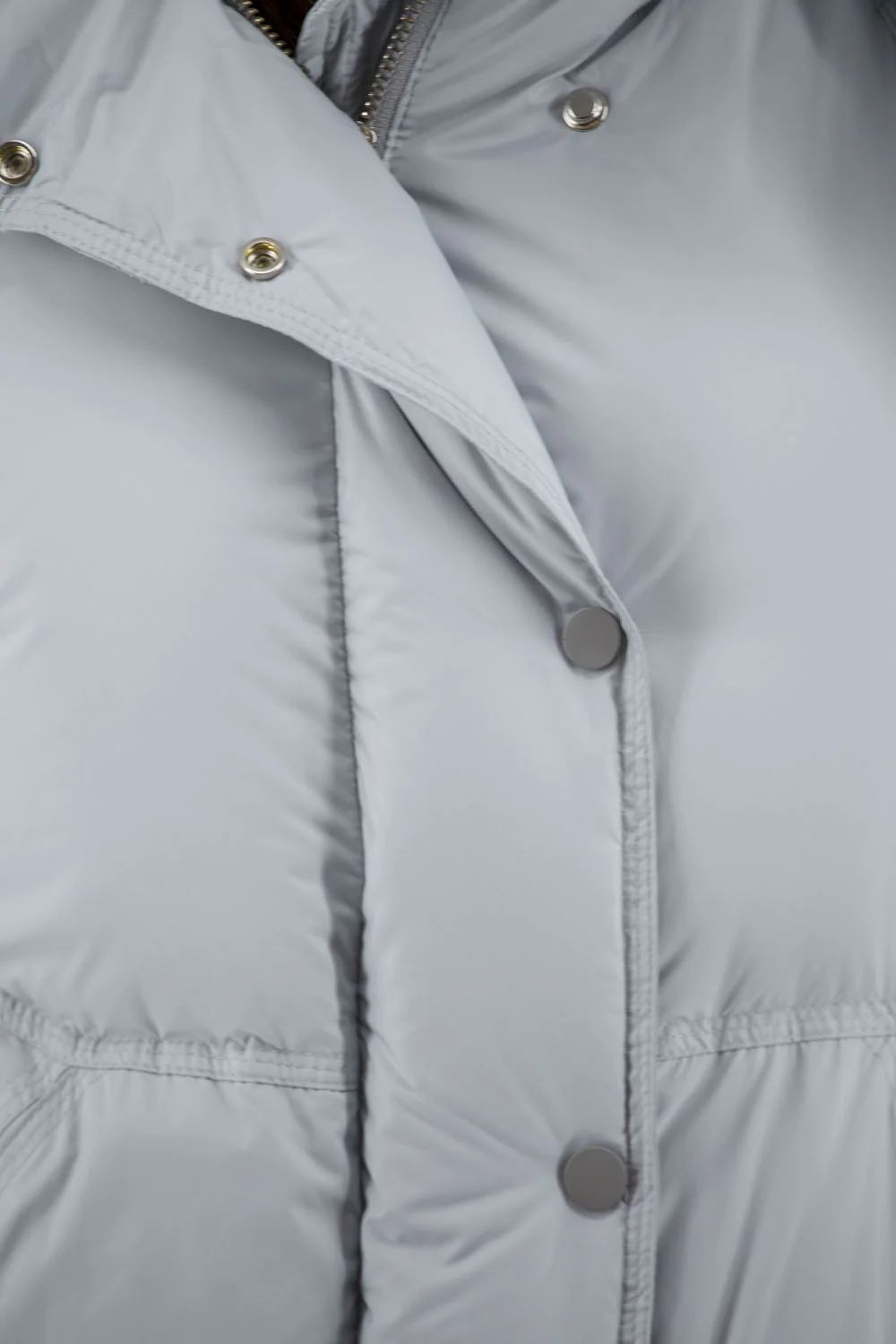
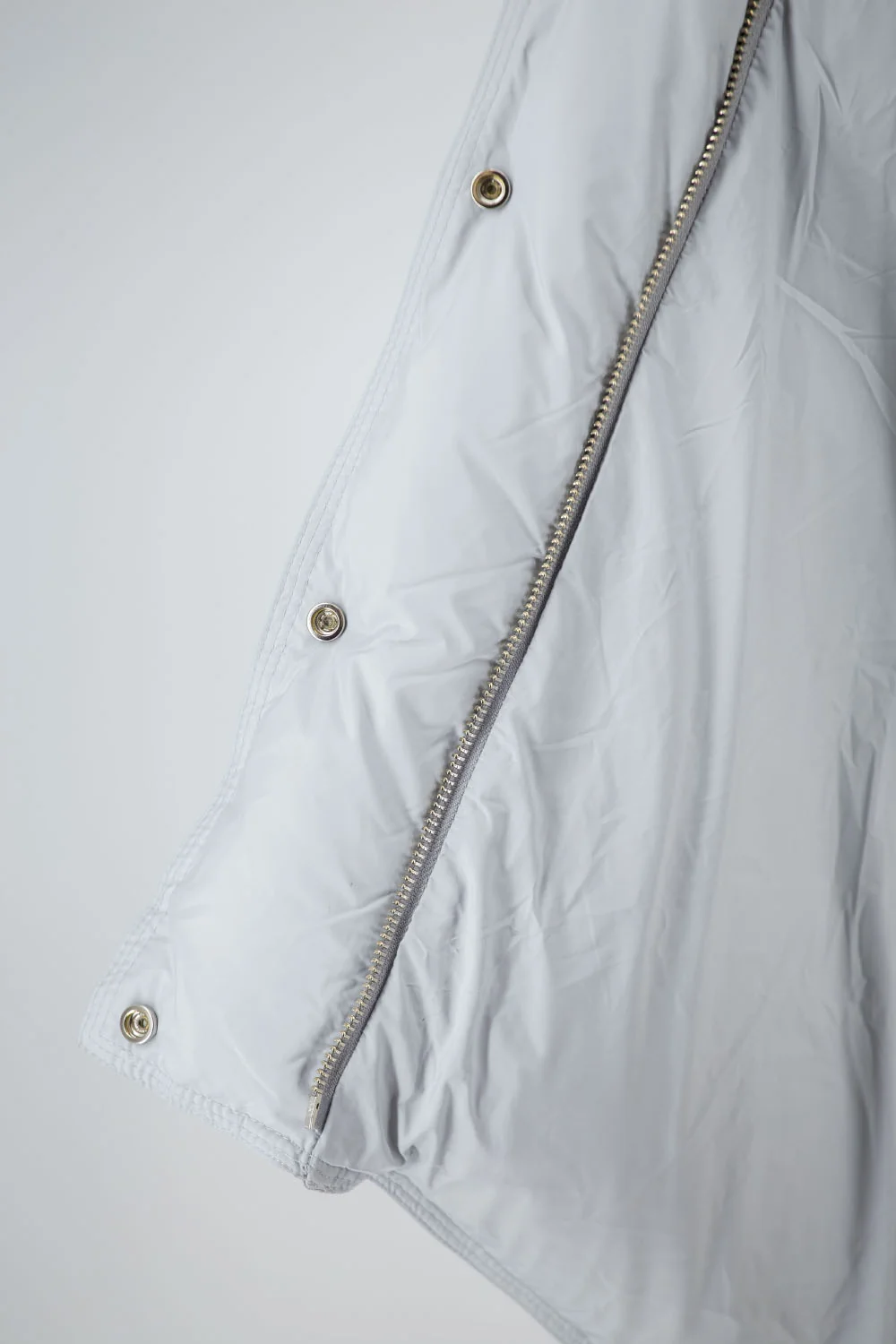
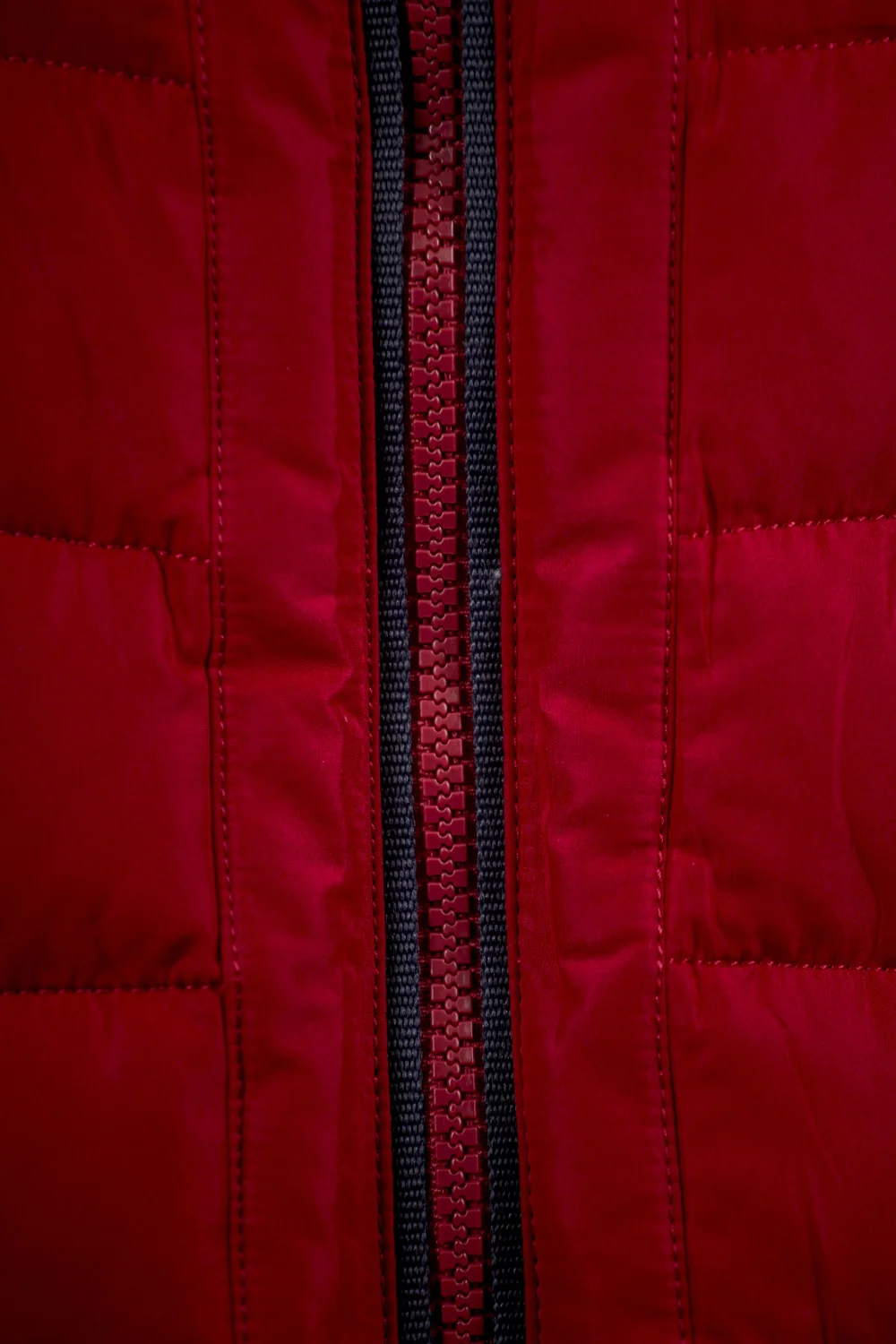
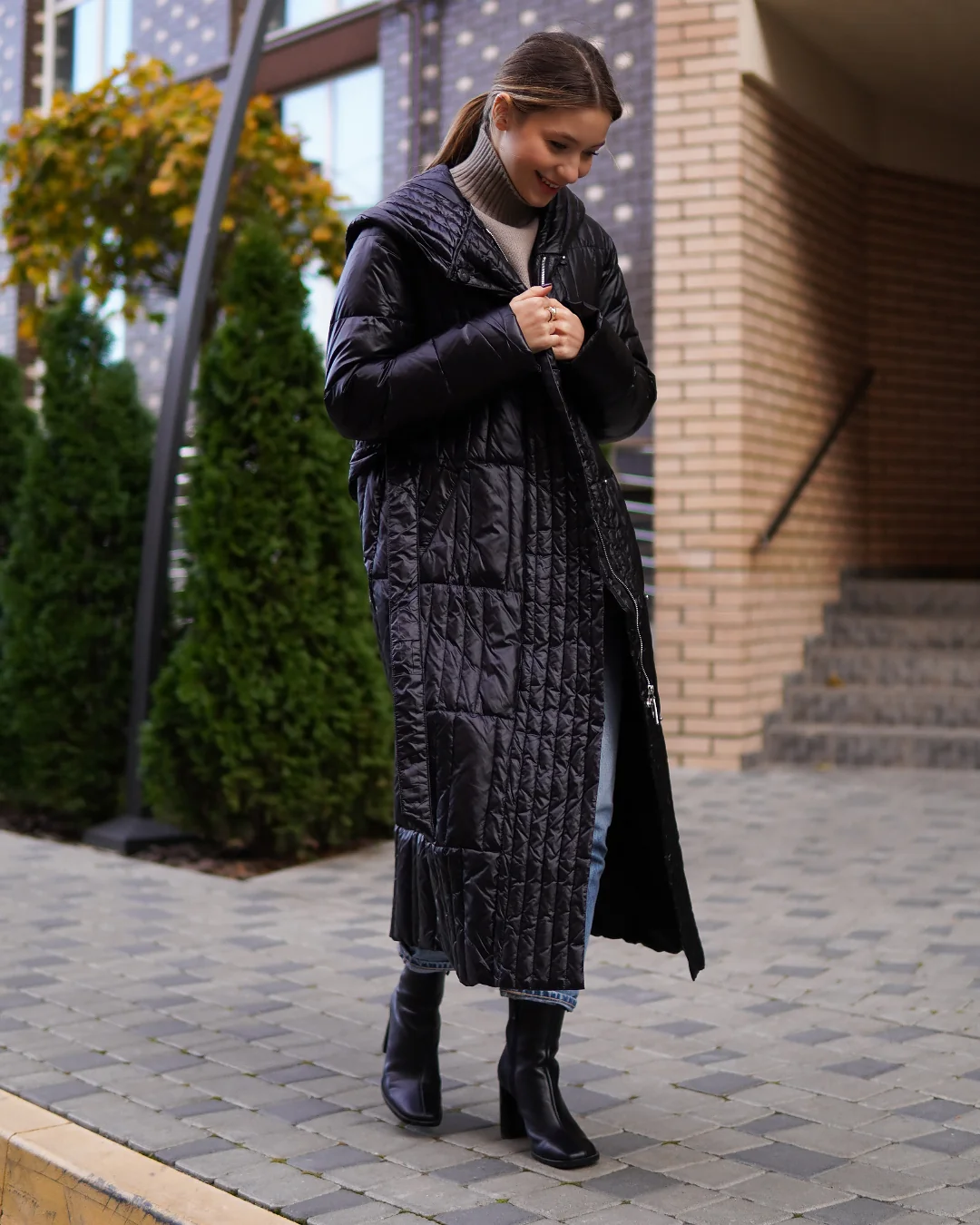
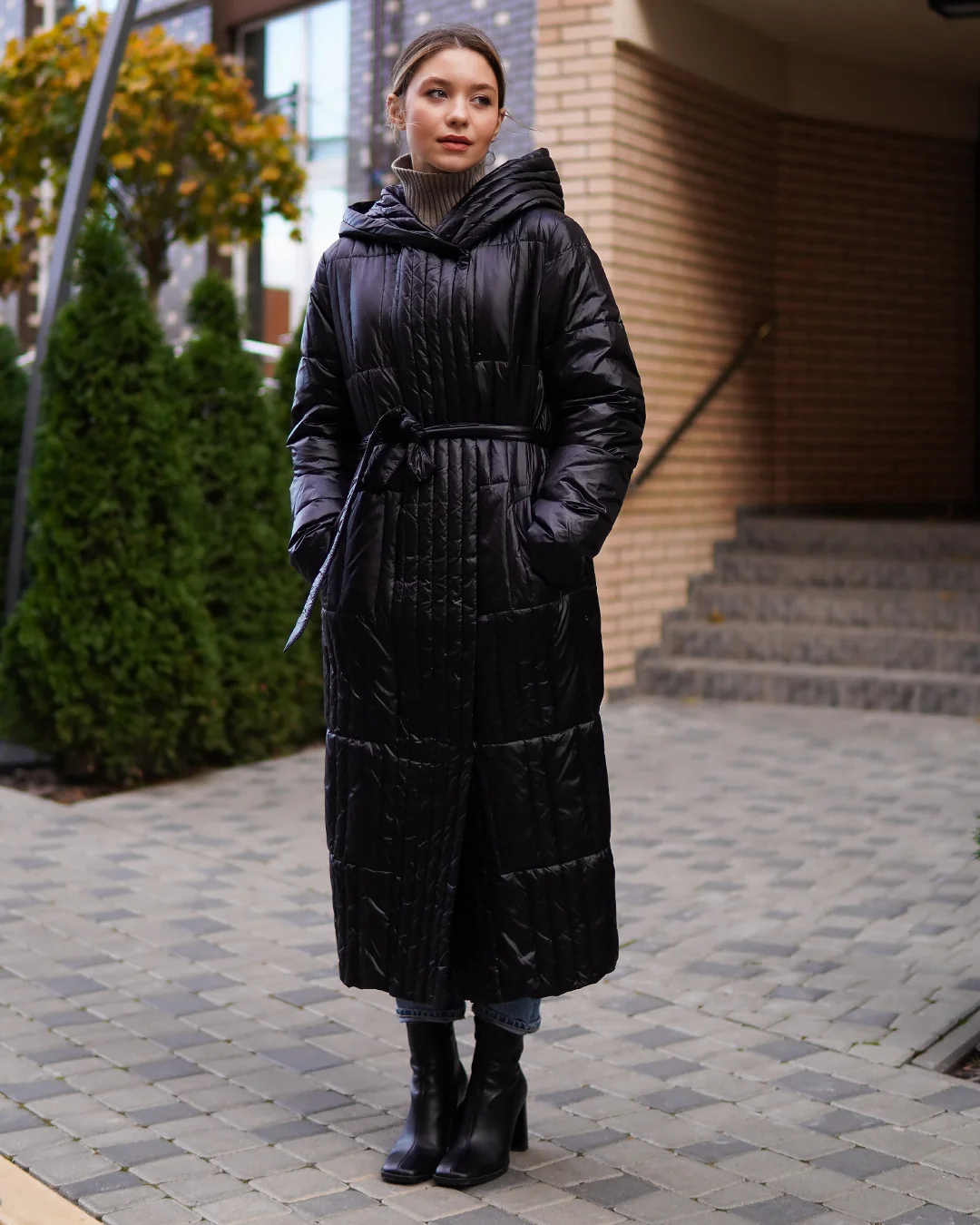
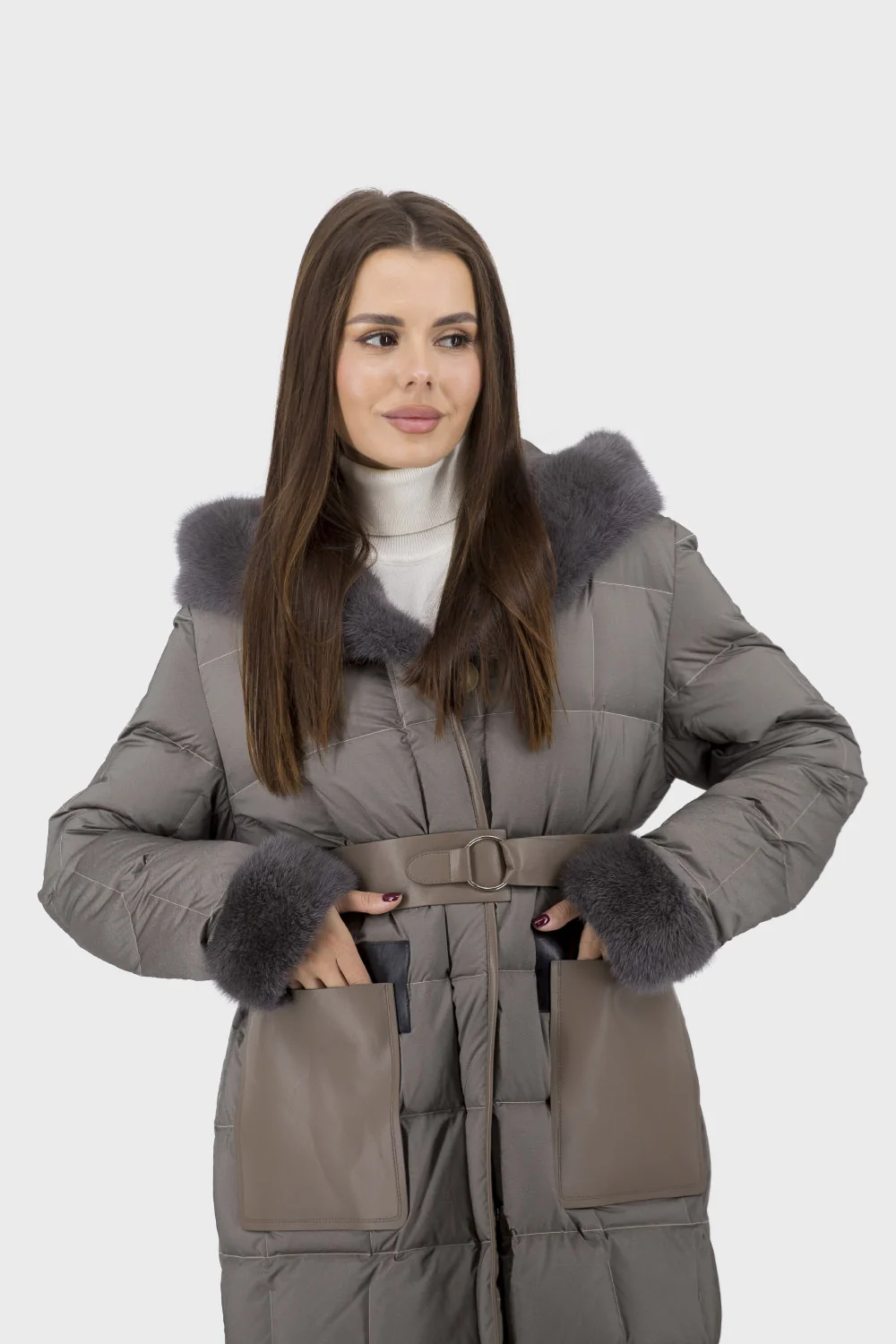
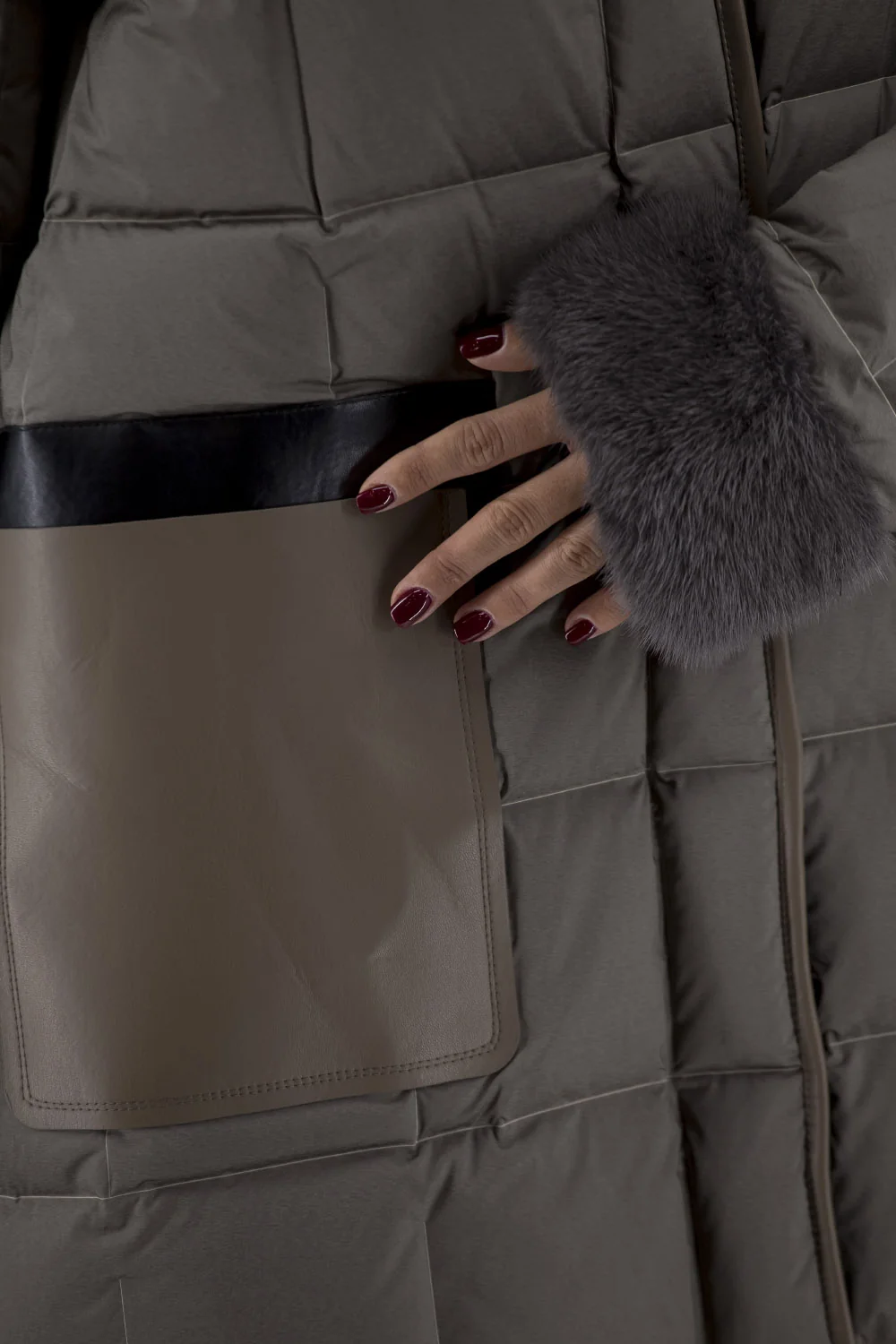
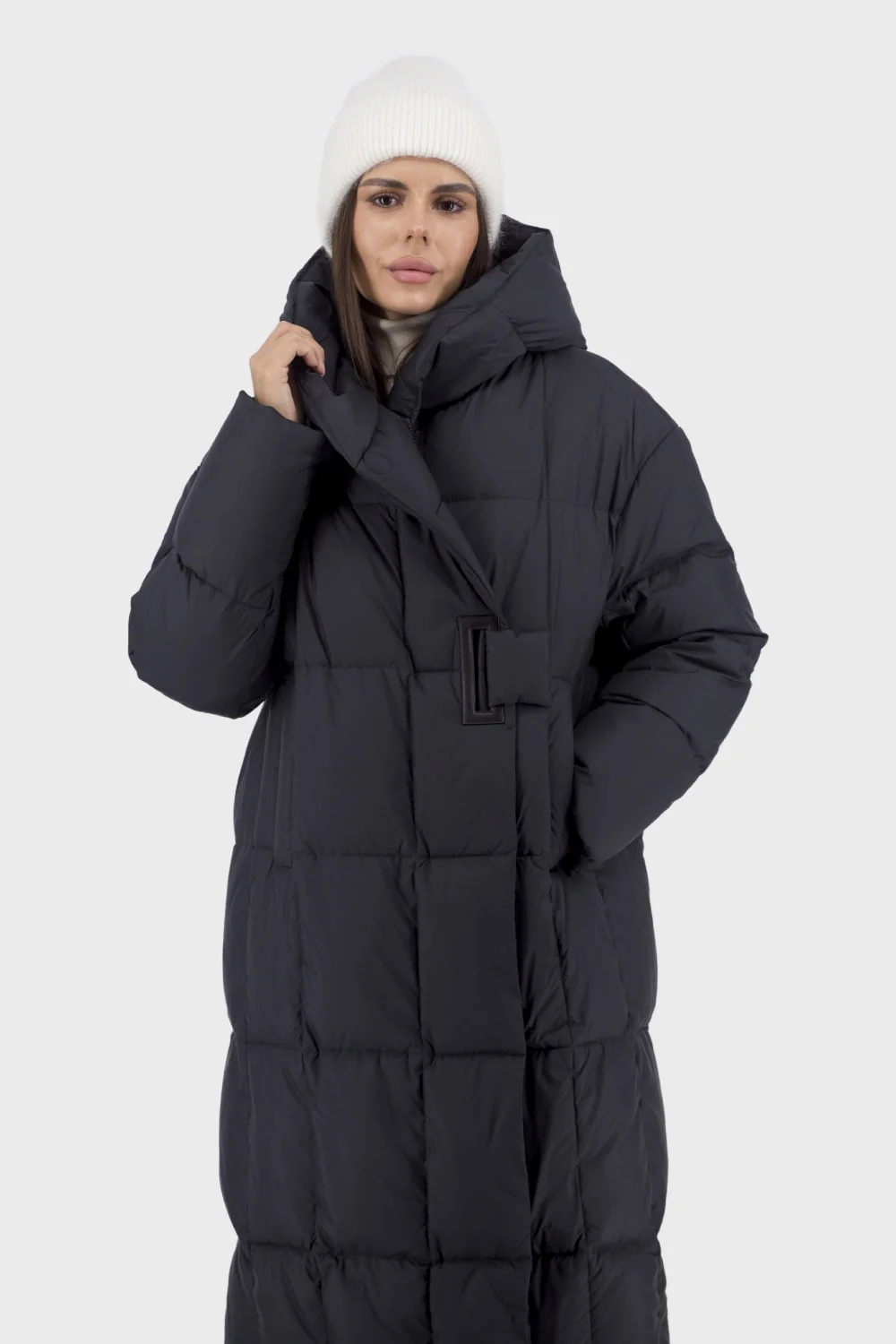
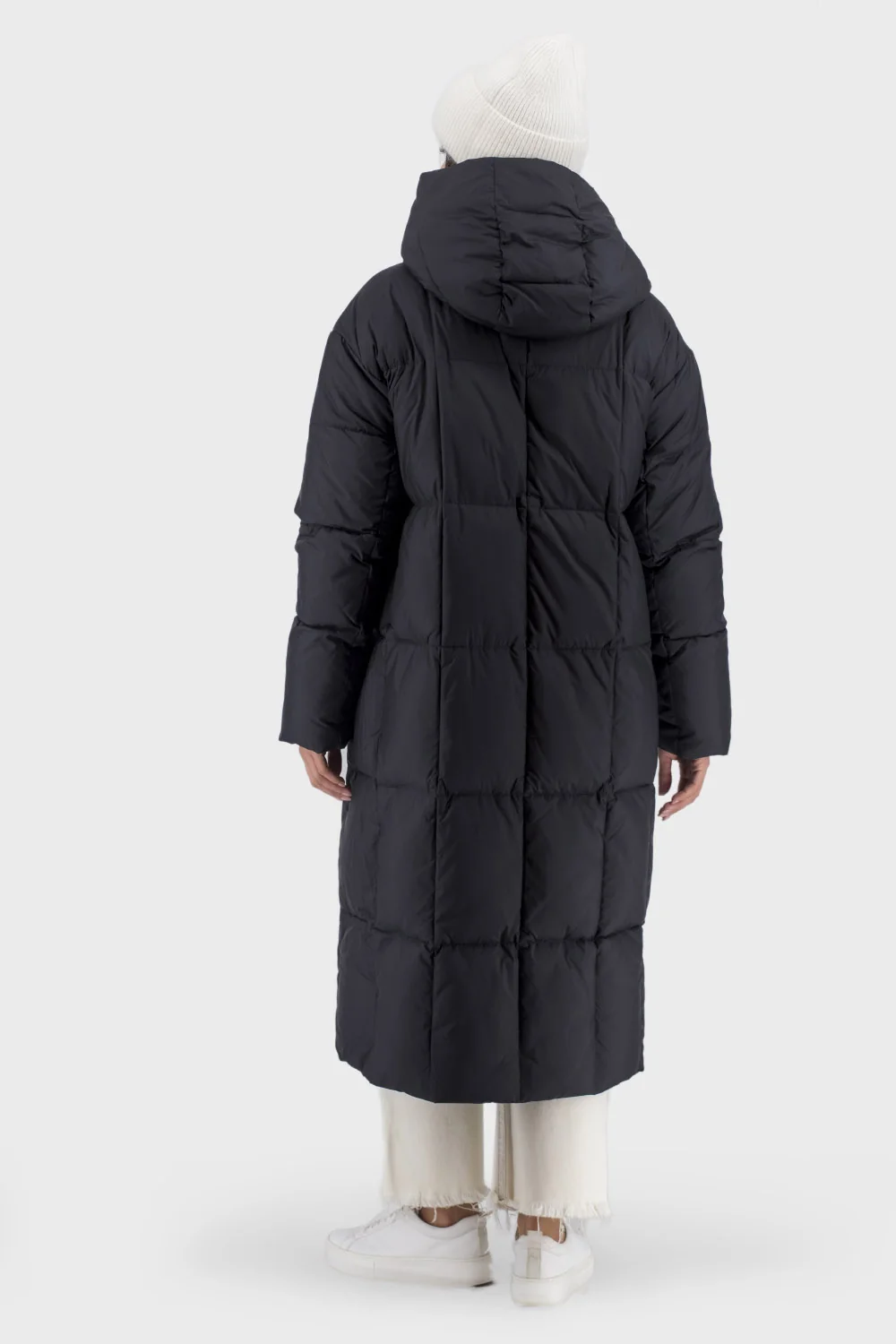
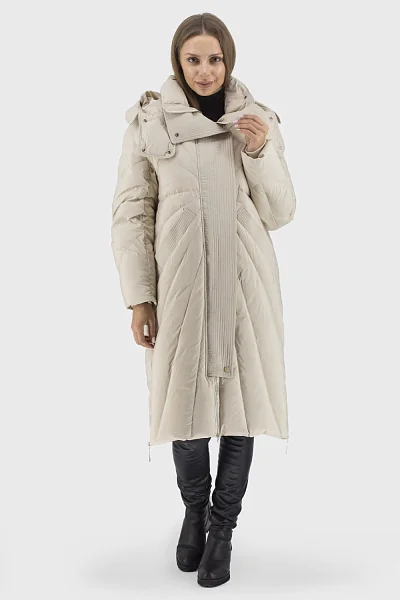
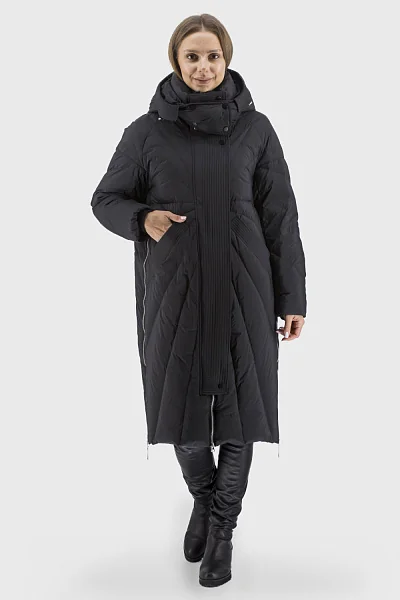
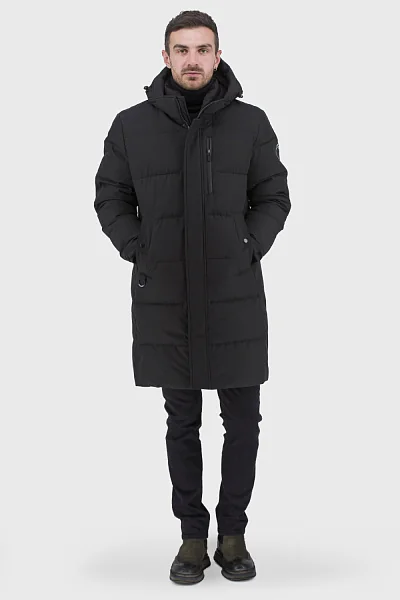
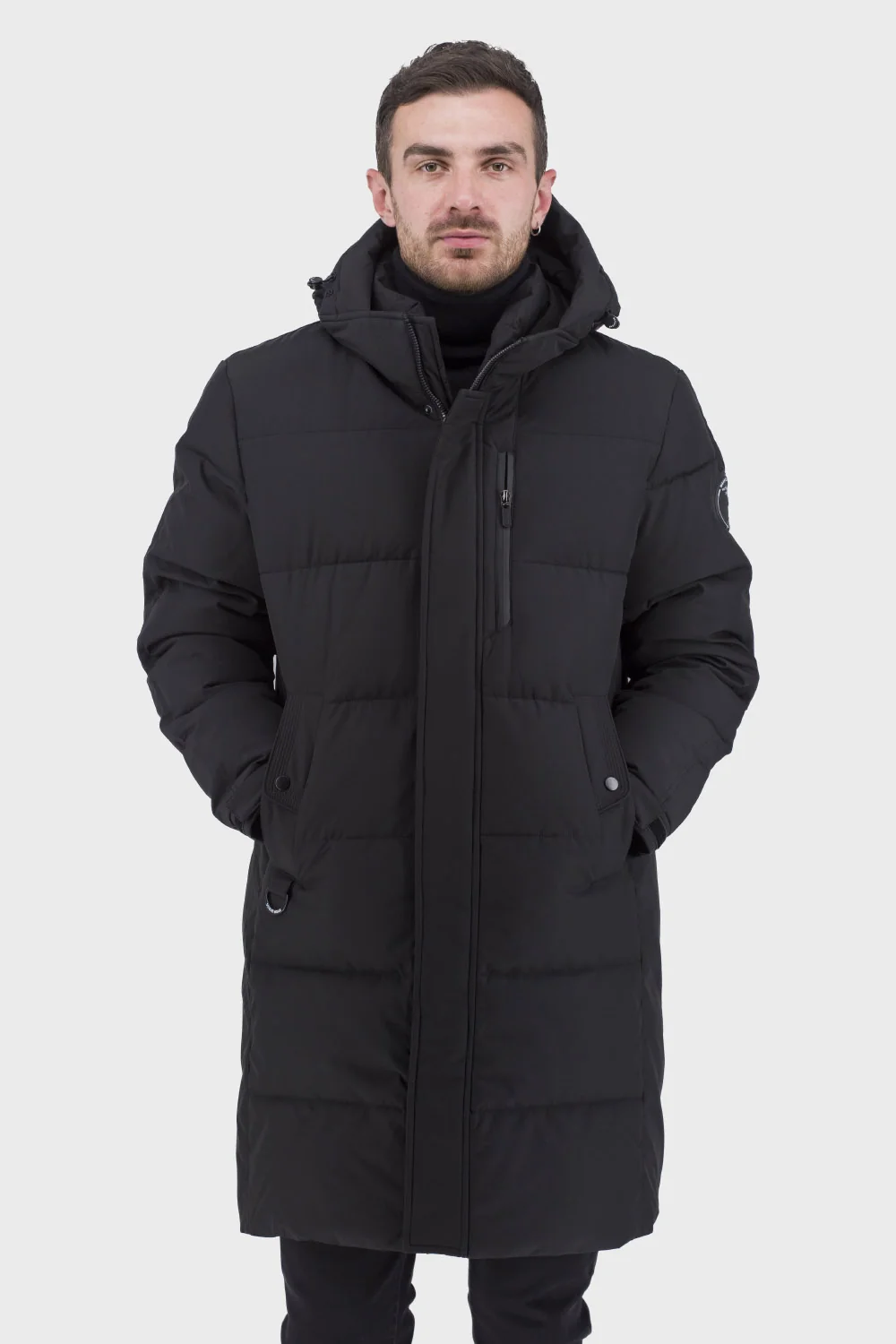
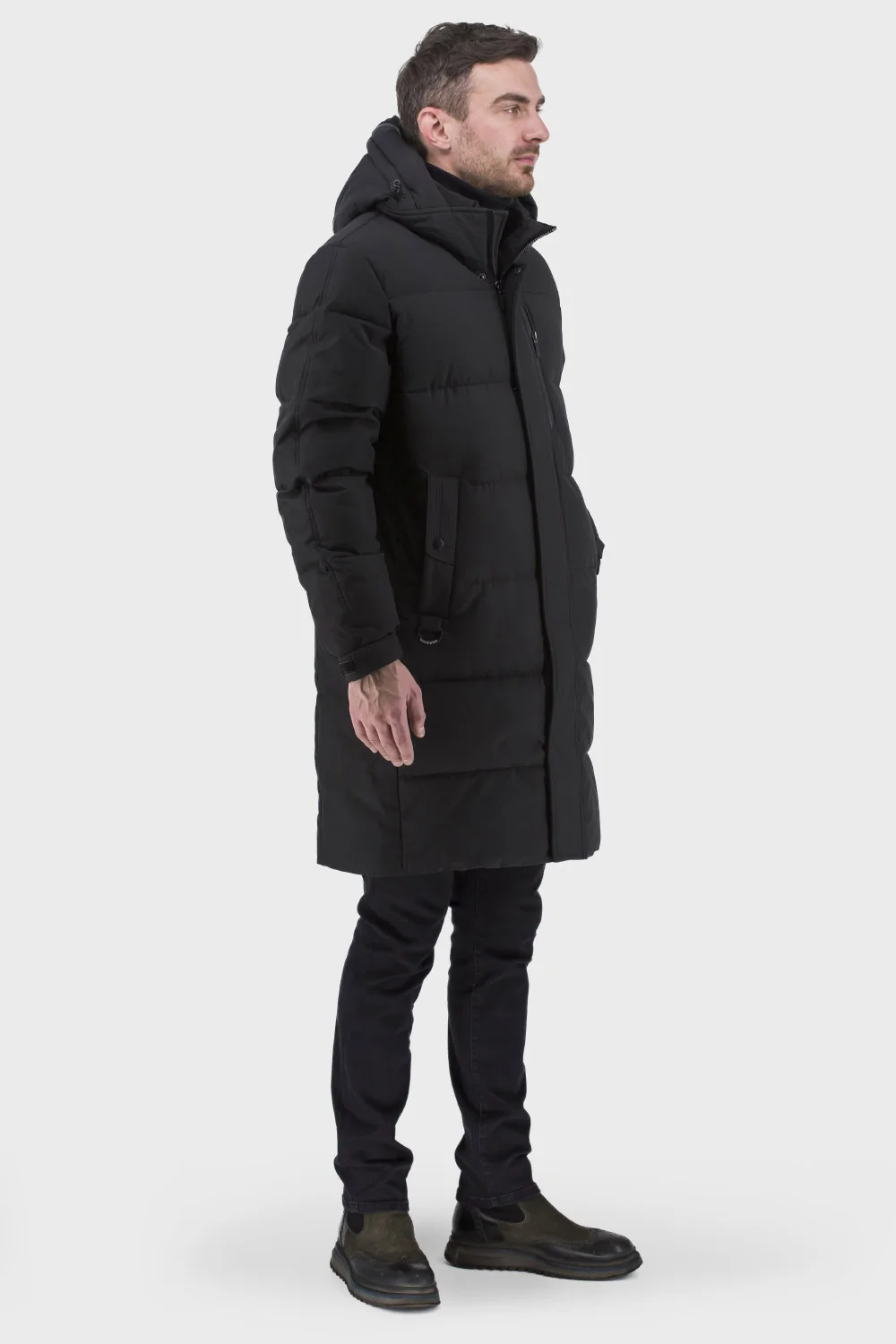
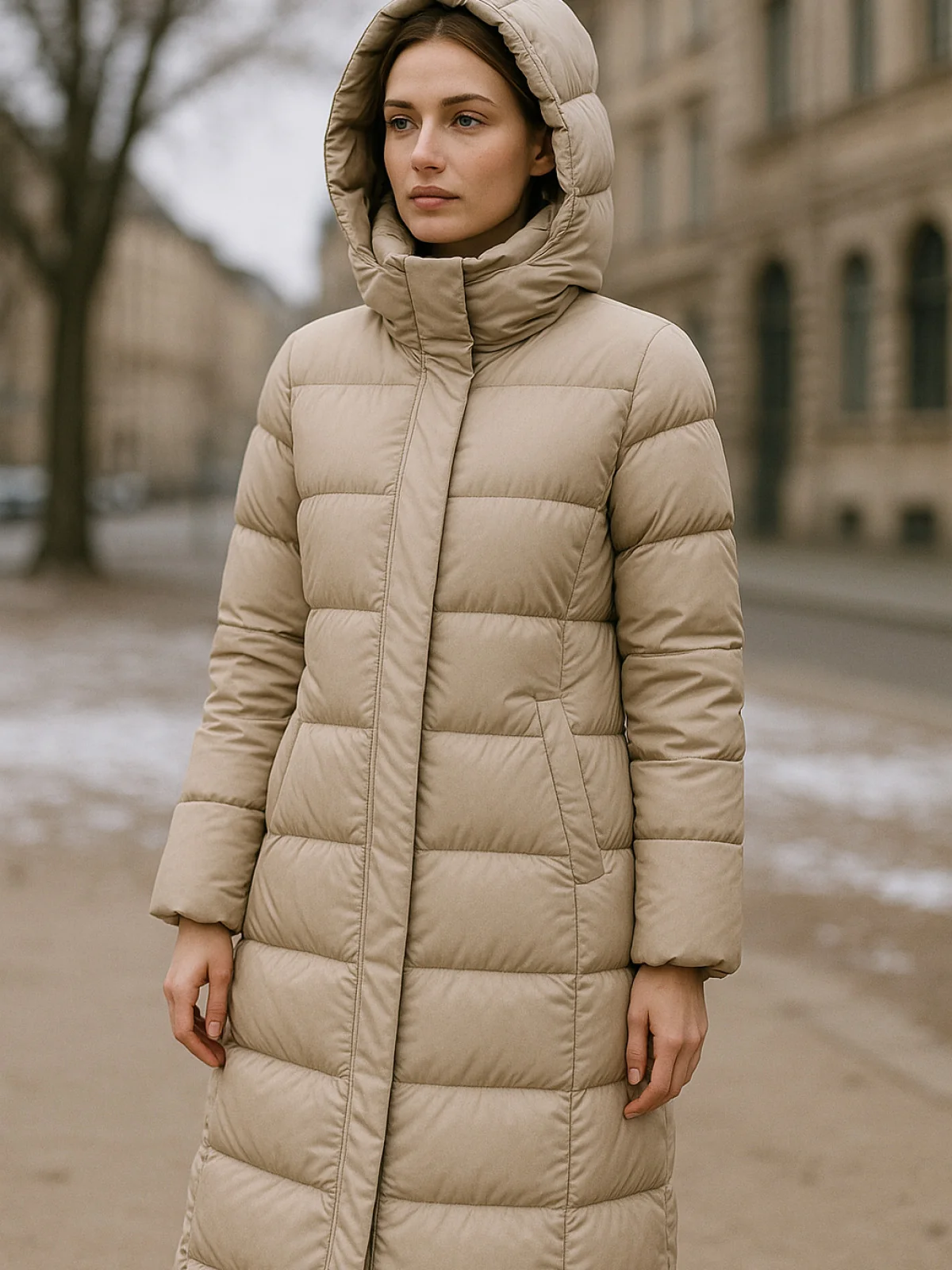
Consider the length, hood, high collar, cuffs and protection behind the main zip.
A longer coat provides greater coverage, while a short style is convenient for driving and active movement.
How to wash down outerwear
Always check the care label. When machine washing is allowed, use a delicate programme and a specialist down detergent.
Standard powder may leave residue and reduce the filling’s ability to regain loft.
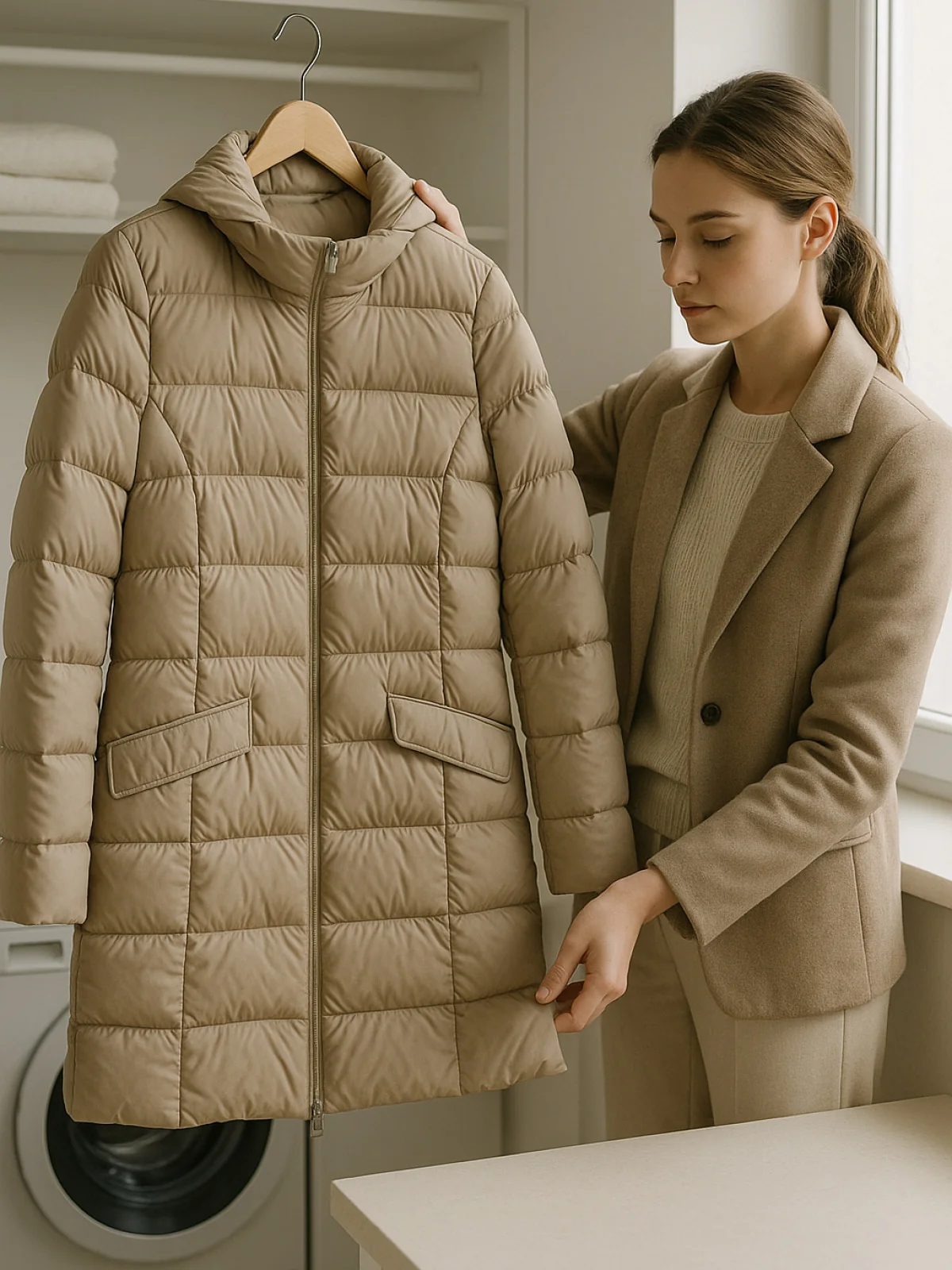
How to dry it
The coat must dry completely. During drying, gently separate and redistribute the filling inside each chamber.
Do not leave the garment wet and folded, and avoid placing it directly against strong heat.
How to store a down coat
Store it fully opened on a wide hanger. Avoid long-term compression in a vacuum bag.
Make sure the garment is clean and completely dry before seasonal storage.
The main buying criteria
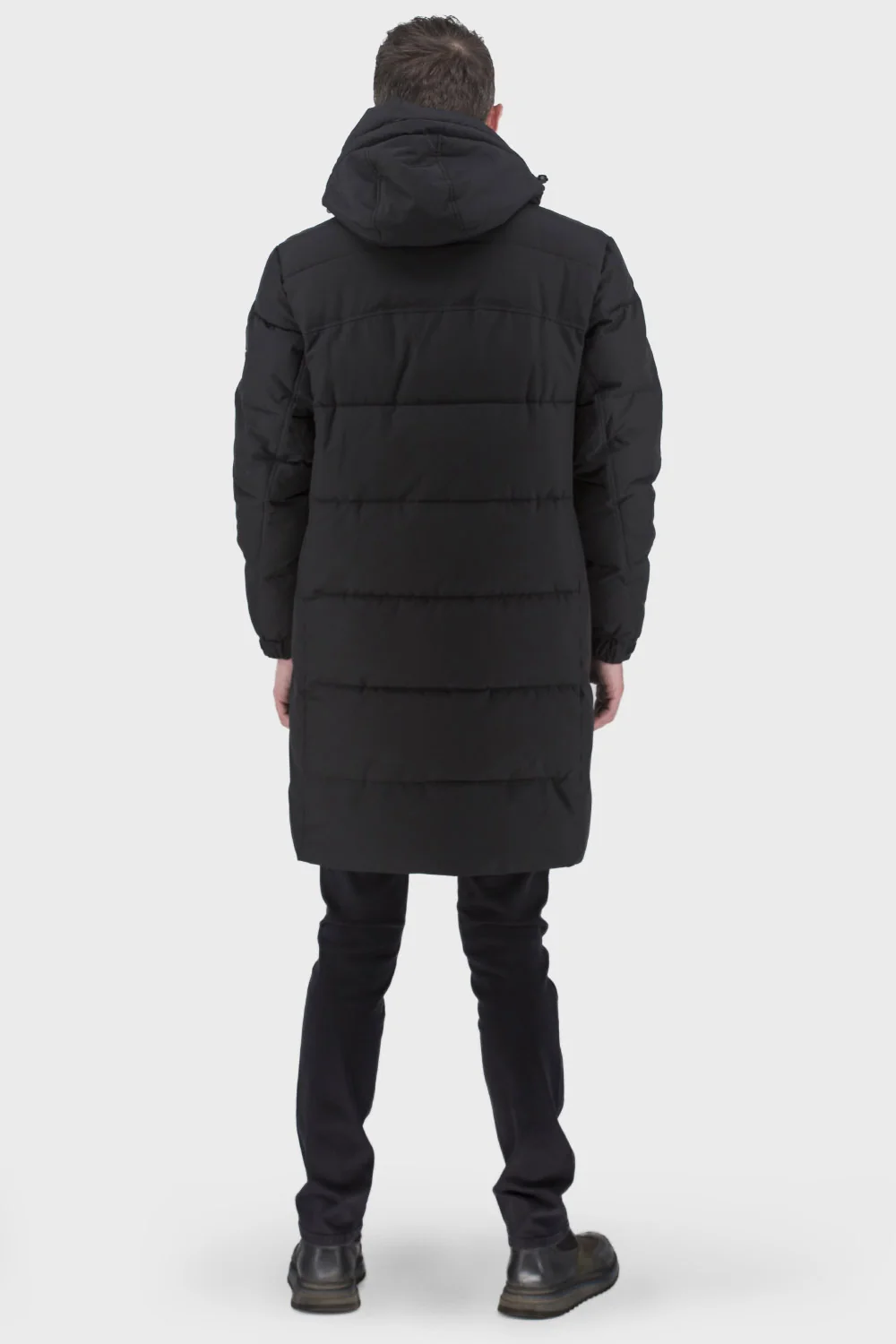
Evaluate the filling ratio, fill power, outer fabric, quilted construction, length, fit and wind protection together.
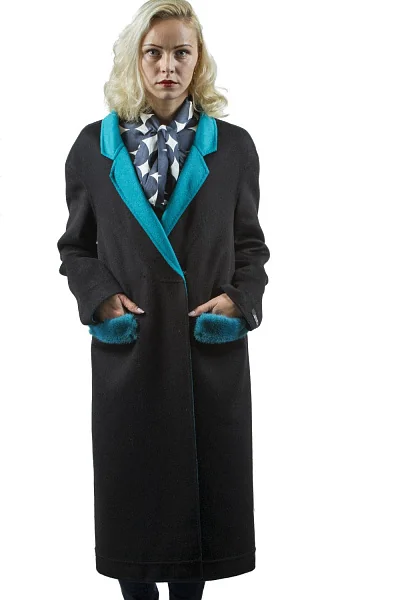
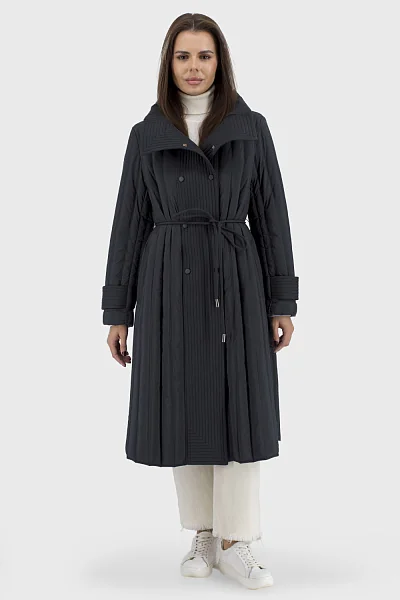
Explore the Bella Bicchi women’s down coat collection with free delivery across Ukraine.
More winter styles are available in the women’s warm down coat category.